
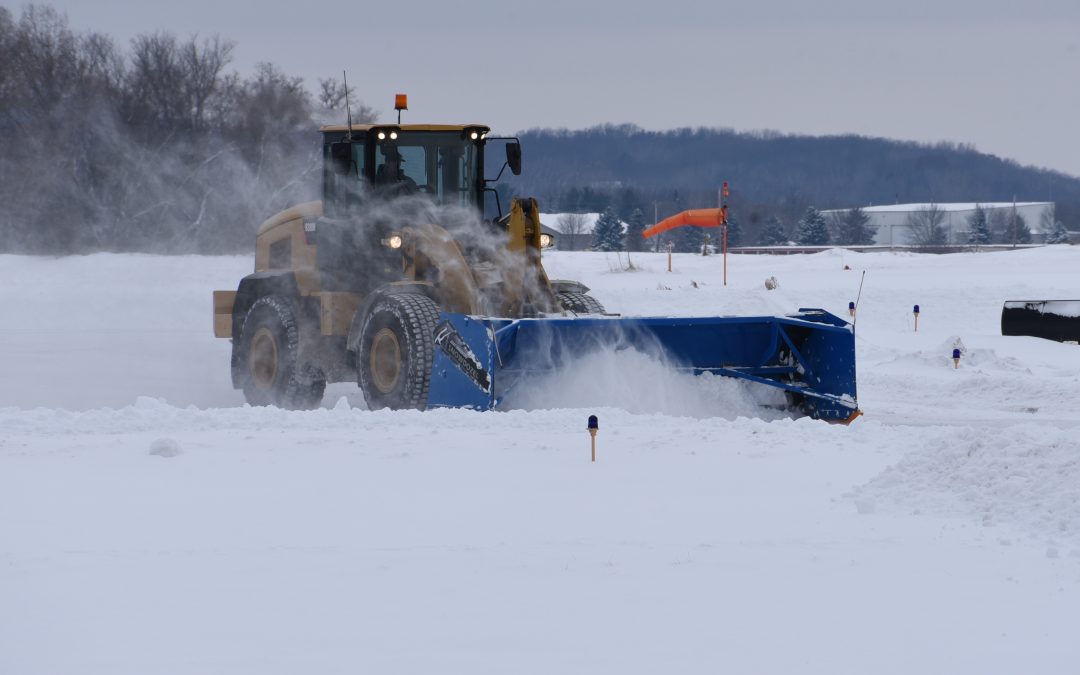
Winter at an airport is a high-stakes, tightly choreographed operation: aircraft safety and on-time departures depend on clearing paved surfaces quickly, completely, and without leaving hazardous debris or ridges. The “best” airport snow plow isn’t a single blade or brand — it’s the right combination of equipment types, build quality, operational flexibility, and sizing choices for each part of the airfield. Below I’ll explain the essential characteristics of top-tier airport plows and show where KAGE Innovation’s SnowDozer and SnowStorm 2-in-1 systems, and wing-plow options, fit into a professional airport fleet.
What airports actually need from plows
Airports need equipment that can:
-
Move large volumes of snow fast (runways and primary taxiways),
-
Contain and stack snow safely away from operational areas (aprons, shoulders),
-
Quickly switch between “angle plow” (to throw snow off to the side) and “pusher/box” modes (to stack snow), and
-
Operate safely at the speeds and duty cycles required for rapid runway clearance.
Federal guidance for airport procurement stresses selecting equipment capable of meeting target clearance times and casting distances, and it explicitly treats high-speed rotary plows and high-efficiency plow/pusher systems as core elements of a robust fleet. The FAA advisory circular on airport snow and ice control equipment gives useful operational benchmarks — for example, expected operating speeds for runway clearance and efficiency comparisons between plow types — that should drive your equipment choices.
Key design features that make a plow “airport-grade”
-
Durability and structural height. Airport plows take repeated hits from compacted snow, ice, and occasional surface debris. Taller blades (typically in the 42–50 inch range for runway/highway plows) and heavily reinforced frames extend service life. Specialized airport plows are engineered for continuous, high-speed use.
-
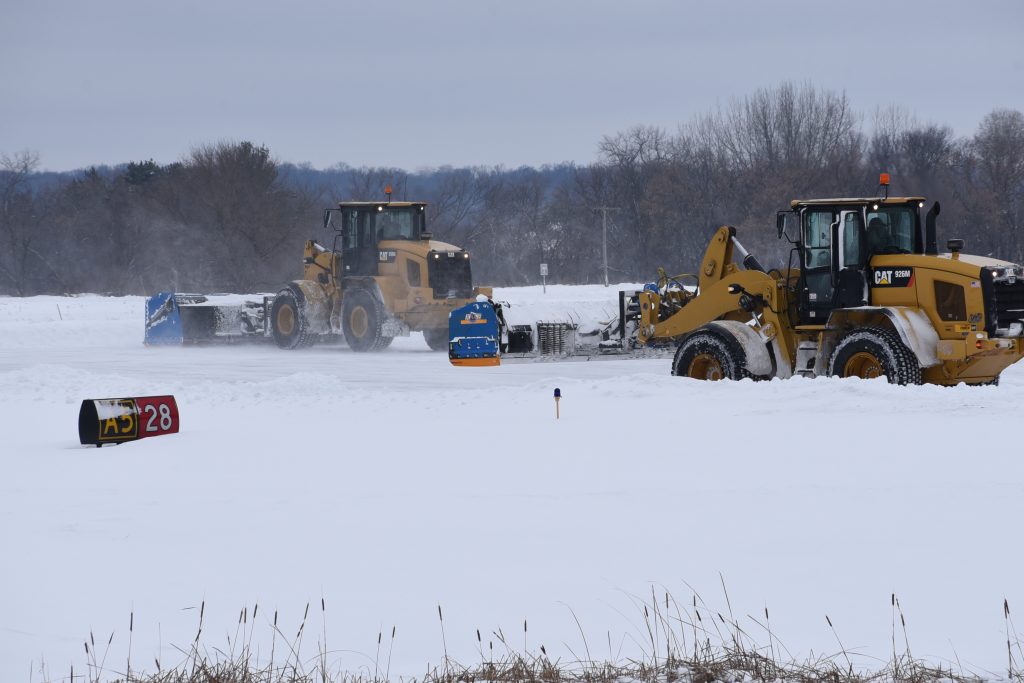
Convertible functionality (angle <-> box). The ability to switch between angle plowing and pushing/stacking snow is a huge productivity boost: you can clear and then immediately box the snow without swapping machines or wasting time. Systems that convert hydraulically from a blade to a box — without the operator leaving the cab — reduce cycle times and labor. KAGE’s SnowStorm and SnowDozer are built around this convertible concept.
-
Wing capability for wider passes. Wing plows let a single carrier vehicle (wheel loader or tractor) cover far more width in one pass. Properly engineered wings fold for transport and extend hydraulically for operation; they’re invaluable on long runways and broad aprons where casting snow far from the pavement is important. KAGE’s SnowDozer Wing extends this idea into very large widths suitable for major airports.
-
Carrier vehicle match. A plow is only as good as its carrier. Heavy rotary and wide wing plows need correspondingly powerful wheel loaders or dedicated snow removal carriers. Matching plow weight, width, and hydraulic demands to the carrier’s specs is critical. The FAA advisory circulars provide selection criteria tied to carrier speed and capacity.
-
Snow containment & bank management. Good systems let you control where snow bank builds, minimize drifting back onto cleared surfaces, and meet bank-height and setback guidelines so aircraft safety isn’t compromised. Operational plans should incorporate safe bank distances from runways/taxiways as recommended in airport snow plans and guidance.
Why the KAGE SnowStorm and SnowDozer airport snow plows series deserve attention
KAGE has built two complementary solutions that reflect the convertible, heavy-duty philosophy airports need:
-
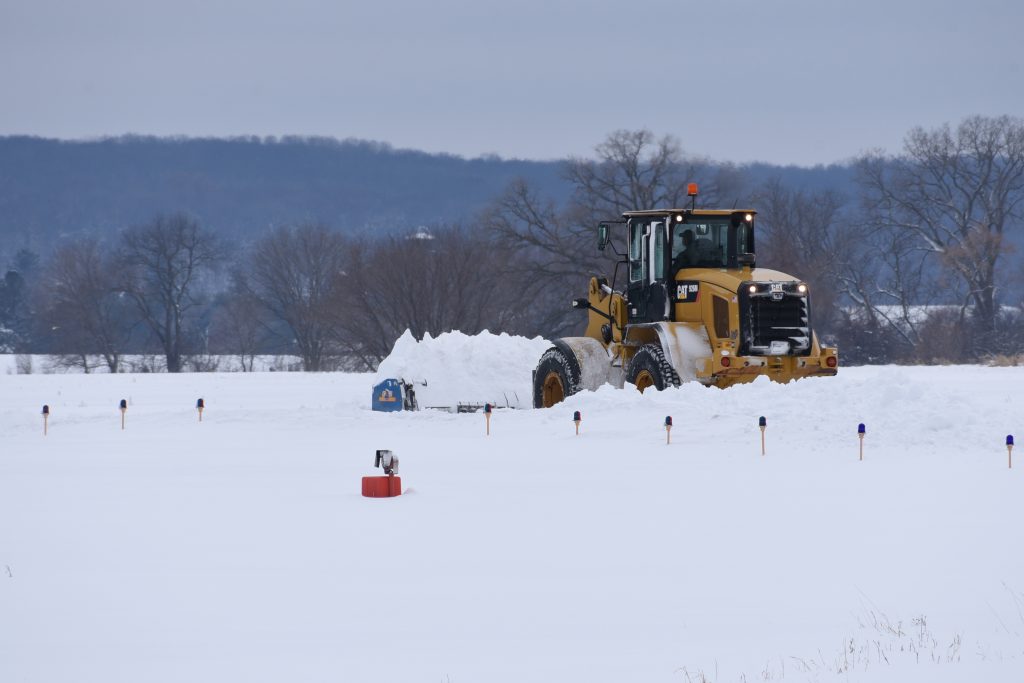
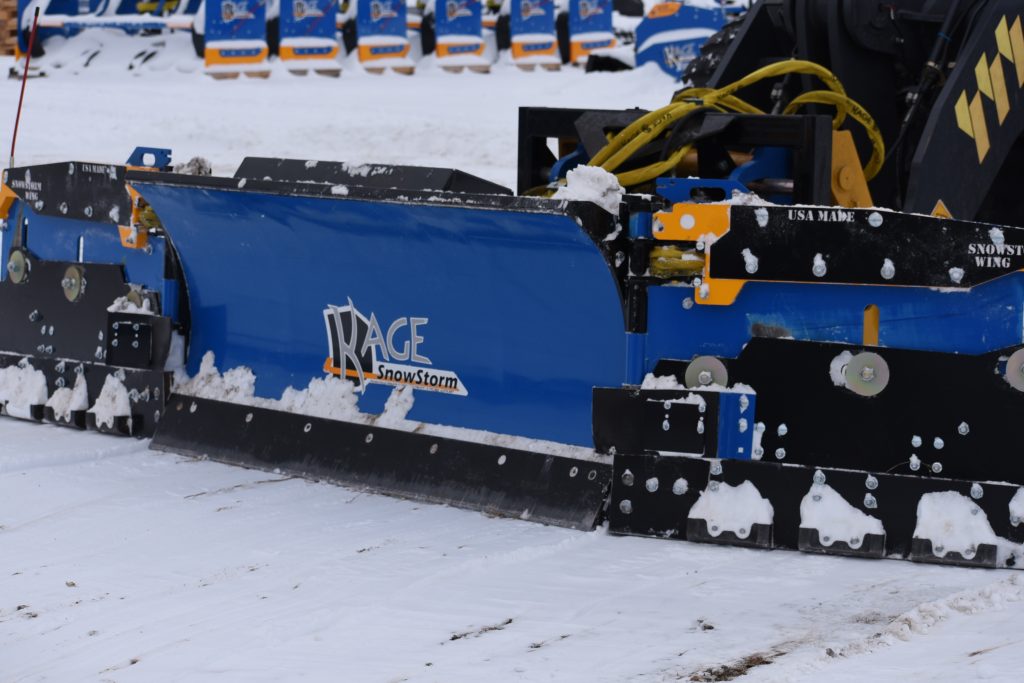
KAGE SnowStorm (front loader / tractor 2-in-1 & wing options) — designed for 15,000–30,000 lb wheel loaders and 100+ horsepower tractors, 36-inch tall SnowStorm 2-in-1 systems combine an angled blade and a detachable snow box that converts hydraulically in seconds. For medium-sized operational areas (taxiways, aprons), that instant changeover reduces passes and crew time while keeping pavement clean. The 2-in-1 SnowStorm systems are available in 10-, 12- and 14-foot widths while the SnowStorm Wing plows add 4 foot hydraulic wings to each side of those, 10-, 12- or 14-foot center blades.
-
KAGE SnowDozer (large wheel loader 2-in-1 + wing options) — built for large wheel loaders in the 30–50K lb class (and 300+ hp tractors), the 48-inch tall SnowDozer is KAGE’s heavy hitter. It’s offered in large widths (12–20 ft center blades, and with 4 or 5 foot wing options), making it suitable for high-volume runway and major taxiway work where wide coverage and rapid stacking are essential. The SnowDozer Wing expands single-unit coverage to lengths that rival multiple conventional plow passes by expanding each swath to up to 28 feet wide.
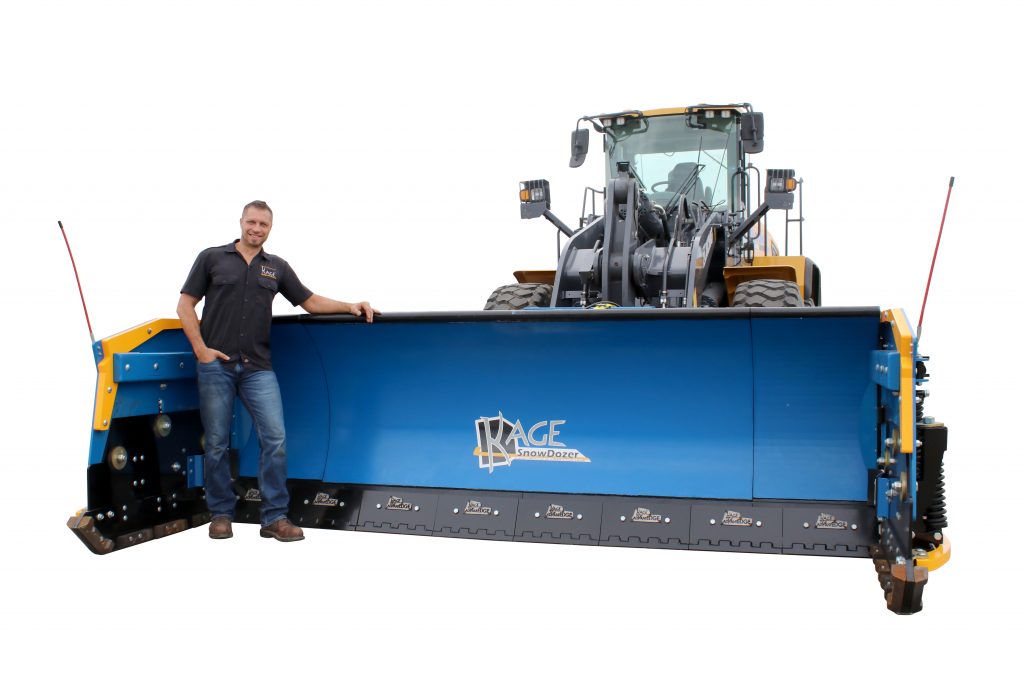
Having both systems in a municipal or regional airport fleet gives you operational flexibility: SnowStorm units for midsize tasks and compact roadable operations; SnowDozer for rapid bulk removal on primary runways and large apron areas.
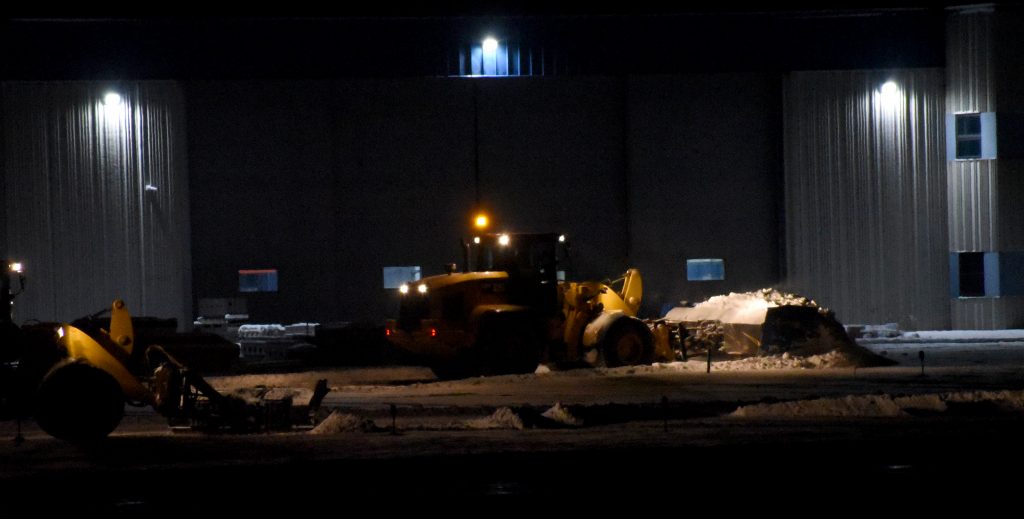
Airport snow plow sizing recommendations by airport surface
Below are practical starting points for choosing plow sizes based on the paved area type. These reflect typical industry practice, FAA guidance on equipment selection, and examples from airport procurement specs.
-
Primary runways (commercial / commercial-service airports):
Use high-speed rotary plows as the primary tool for heavy accumulations and to cast snow far from the runway; supplement with wide center blades and wing plows on carrier vehicles for follow-up scraping and final passes. Blade/wing widths in the 22–28 ft range on powerful carriers (or a 16–22 ft center blade with hydraulic wings) are common at larger airports; smaller commercial fields may operate with 16–20 ft plows plus rotaries. Ensure carrier speed and blade height meet FAA clearance targets. -
Taxiways & rapid exit taxiways (priority 1/2):
Taxiways require complete clearing but often at smaller widths. 12–20 ft blades — or 10–20 ft SnowStorm-class systems — work efficiently when sized to the taxiway width and carrier capability. Wings are helpful where adjacent shoulders and shoulders/bank space allow casting. -
Aprons, aircraft parking, and hangar areas:
These areas need careful bank placement and less high-speed work. Box pushers and 8–16 ft blades (or smaller winged configurations that fold for maneuverability) are often ideal. For large cargo or maintenance aprons, consider wider pushers (20 ft+) used at lower speeds for stacking snow safely away from parking stands. -
General aviation/reliever airports and small strips:
Simpler fleets can rely on SnowStorm-style 10–14 ft convertible systems or standard 8–12 ft plows (like the KAGE SnowFire series of plows) on compact carriers. Rotary units are less common at very small fields but should be considered if frequent heavy storms occur.
Operational tips — beyond picking a plow
-
Mix equipment types. A mature airport SNOW plan usually combines rotaries (for heavy throw), high-speed plows/center blades (for fast runway passes), wing plows (for single-pass width), and box pushers (for stacking on aprons). FAA procurement guidance specifically suggests selecting equipment to meet required casting distances and clearance times.
-
Match blade height to pavement profile. Road-grade blades may not be tall enough for deep accumulation; runway blades tend to be taller (e.g., 42–50 in). Taller blades help reduce sloughing and re-deposit on the runway.
-
Bank management. Keep snow banks low and placed to reduce drifting back onto operational surfaces; many airport plans recommend bank distances and maximum heights near runways to preserve safety clearances. Plan where snow will be stored before the storm arrives.
Conclusion
The best airport snow-removal capability is built around flexibility, durability, and correct sizing. KAGE’s SnowStorm and SnowDozer systems (as well as the SnowFire systems) embody the convertible, heavy-duty approach many airports need: SnowStorms provide efficient mid-sized clearing for taxiways and aprons, while SnowDozer (especially with its wing option) brings large-area throughput for runways and big aprons. Pair these systems with dedicated rotaries and a clear snow-bank strategy, follow FAA equipment selection guidance, and you’ll maximize safety and minimize downtime when winter arrives.
Recent Comments