
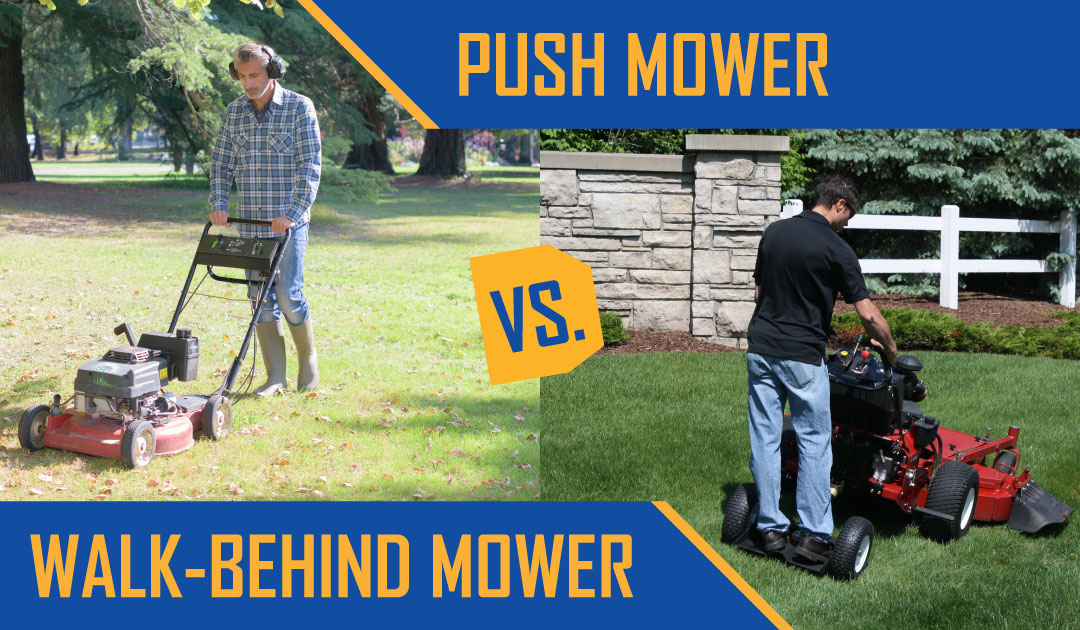
Key Differences, Commercial Use, and Riding Options
When choosing a lawn mower, the terms push mower and walk-behind mower are often used interchangeably—but they shouldn’t be. While both fall under the category of walk-behind equipment, there are major differences in performance, capability, and ideal use cases. The distinction becomes even more important when comparing residential self-propelled mowers vs. commercial walk-behind mowers, and when considering upgrades like sulkies or even considering stand-on machines.
Understanding these differences can help you choose the right equipment for your property—or your business.
Push Mower vs. Walk-Behind Mower: The Basics
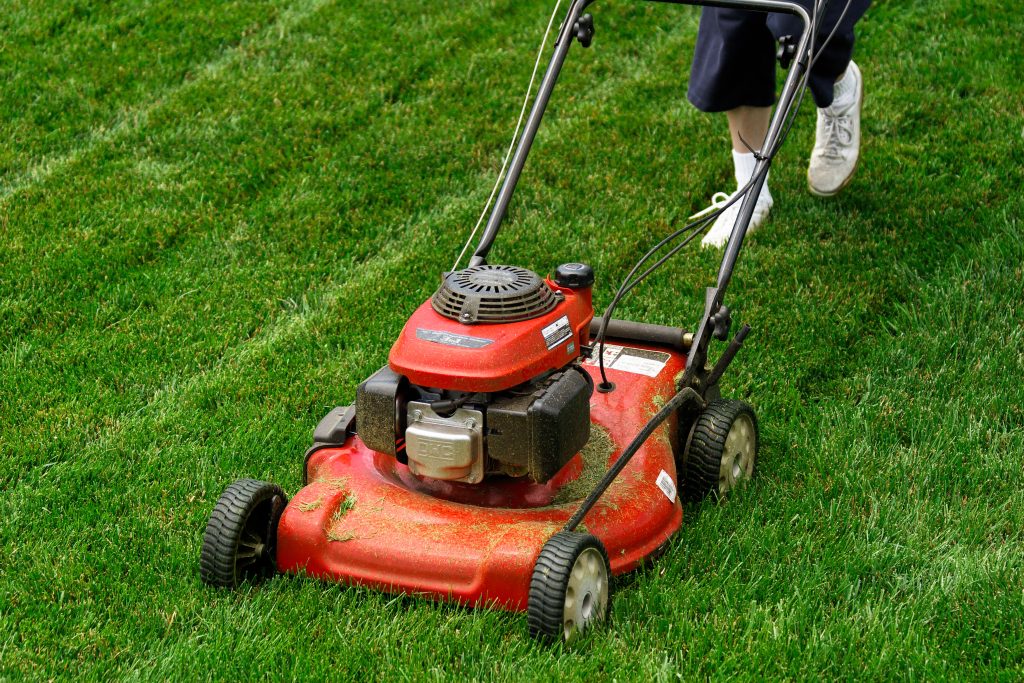
A push mower is the simplest form of mower. It requires the operator to manually push it forward, with the engine (if present) only powering the blade—not the wheels. These are best suited for small, flat lawns and users who prioritize affordability and simplicity.
A walk-behind mower, on the other hand, is a broader category that includes:
- Push mowers
- Self-propelled residential mowers
- Commercial walk-behind mowers
Most commonly, when people refer to a walk-behind mower, they mean self-propelled or commercial-grade machines that assist movement and increase productivity.
Self-propelled mowers use a drive system to move forward, making them faster and easier to operate, especially on uneven terrain or larger lawns.
Commercial Walk-Behind vs. Residential Self-Propelled Mowers
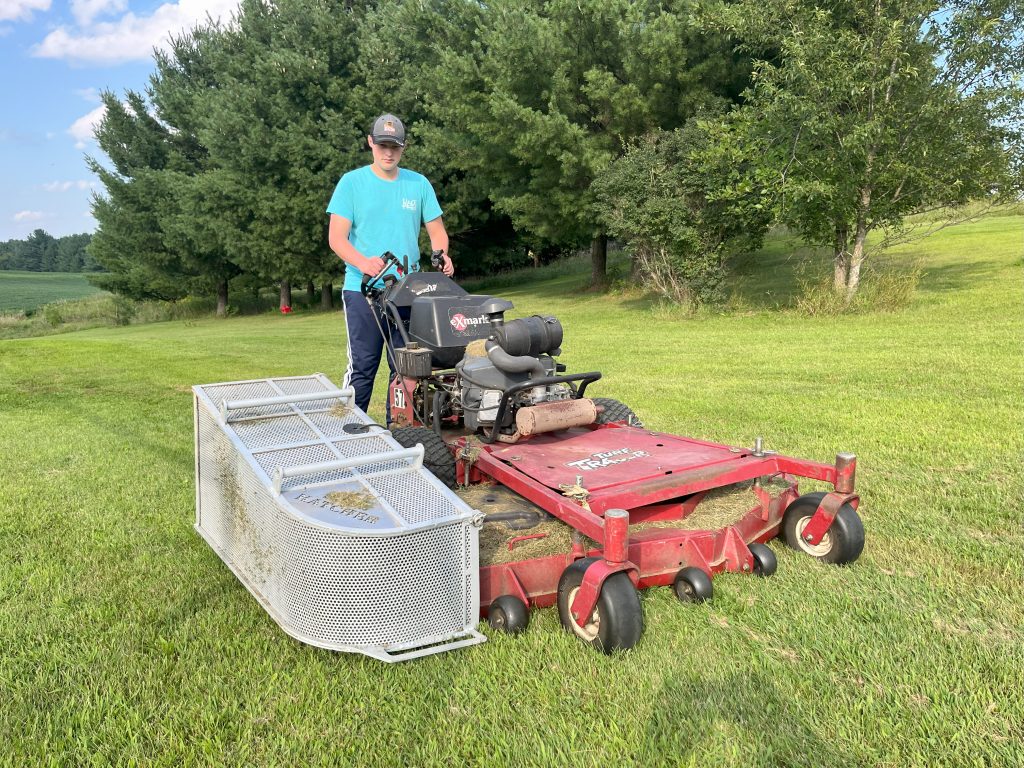
One of the most important distinctions within the walk-behind category is between residential self-propelled mowers and commercial walk-behind mowers.
Build Quality and Durability
Commercial walk-behind mowers are built for daily, heavy-duty use. They feature reinforced frames, high-grade components, and longer lifespans. Residential mowers, by contrast, are designed for occasional use and lighter workloads.
Performance and Cutting Capability
- Residential self-propelled mowers: Typically have smaller cutting decks (around 20–22 inches) and moderate power
- Commercial walk-behind mowers: Offer larger decks (often 32–60 inches), higher horsepower, and better cutting performance in thick or wet grass
This means commercial units can cover significantly more ground in less time.
Transmission and Control
Commercial walk-behind mowers often use hydrostatic or gear-driven transmissions, giving operators precise control and smoother operation. Residential models usually rely on simpler drive systems with fewer speed options.
Frequency of Use
- Residential mowers: Weekly or biweekly use on typical home lawns
- Commercial mowers: Daily use across multiple properties
Because of this, commercial machines are engineered for longevity and efficiency under constant demand.
The Advantage of Walk-Behind Mowers: Versatility
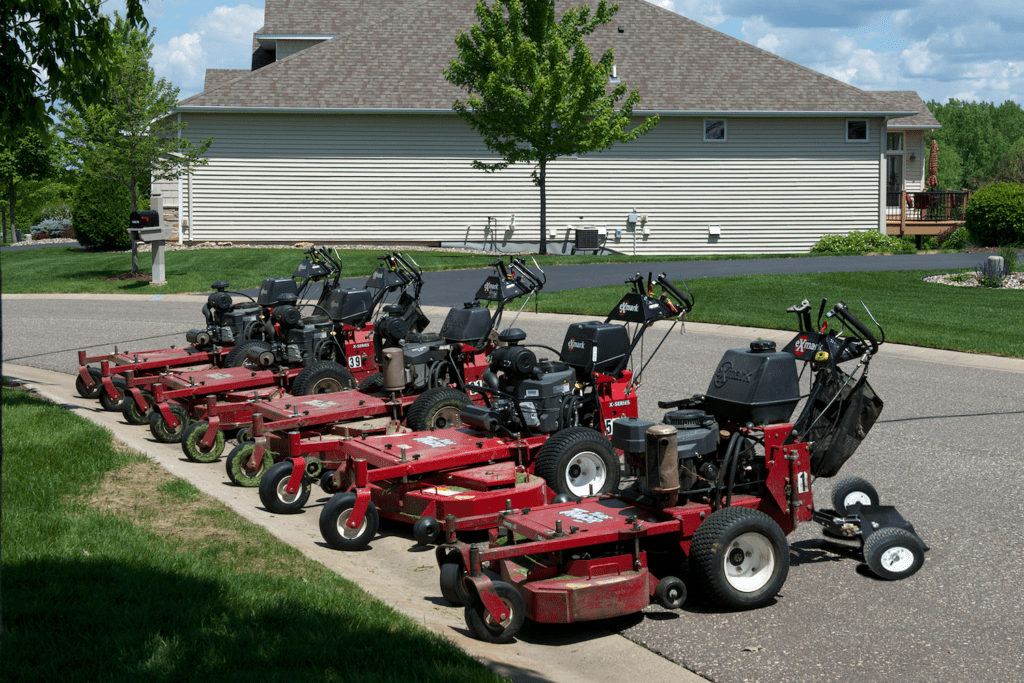
Commercial walk-behind mowers excel in areas where other mower types struggle:
- Tight spaces and gated properties
- Steep slopes and uneven terrain
- Areas requiring precision trimming
They are often favored for their control and maneuverability, especially compared to larger riding equipment.

Adding a Sulky: Turning a Walk-Behind into a Rider
One of the biggest advantages of commercial walk-behind mowers is their ability to pair with a sulky—a riding platform that attaches to the back of the mower.
This is where products like the KAGE Wheel Kaddy line come into play.
A sulky allows the operator to stand and ride instead of walking, transforming the mower into a hybrid machine.
Benefits of Using a Sulky
- Reduces operator fatigue
- Increases mowing speed and productivity
- Maintains maneuverability in tight areas
- More cost-effective than buying a dedicated riding mower
Modern sulkies, like those in the KAGE Wheel Kaddy lineup, can also include suspension systems and pivoting designs that improve comfort and protect turf during turns.
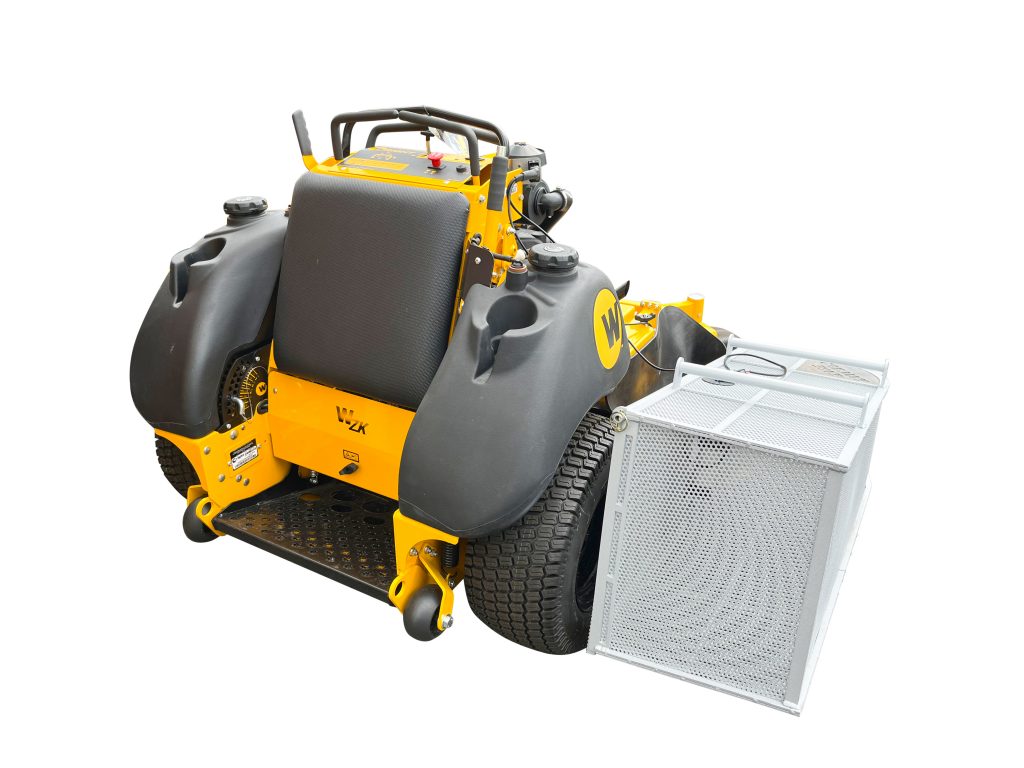 Walk-Behind with Sulky vs. Stand-On Mowers
At first glance, a walk-behind mower with a sulky may seem similar to a stand-on mower—but there are important differences.
1. Flexibility and Detachability
- Walk-behind + sulky: The sulky can be detached, allowing the mower to revert to a traditional walk-behind unit
- Stand-on mower: Always used in riding mode
This makes walk-behind setups more versatile for properties with mixed conditions.
2. Maneuverability
Walk-behind mowers (with or without sulkies) tend to be more maneuverable in tight spaces, such as narrow gates or intricate landscaping.
Stand-on mowers, while still agile, are generally better suited to more open areas.
3. Speed and Productivity
Stand-on mowers typically have:
- Larger cutting decks
- Faster mowing speeds (up to 5–10 mph vs. ~2–4 mph for walk-behinds)
This makes them more efficient for large, open properties.
4. Terrain Handling
Walk-behind mowers are often preferred for:
- Steep slopes
- Uneven terrain
They offer better control and stability in challenging conditions.
Stand-on mowers perform well on mixed terrain but may not match the precision and control of walk-behinds on difficult slopes.
5. Cost Considerations
- Walk-behind mower + sulky: Lower overall investment
- Stand-on mower: Higher upfront cost
For many landscaping professionals, a sulky-equipped walk-behind offers a cost-effective alternative to a stand-on unit.
When to Use Each Type of Mower
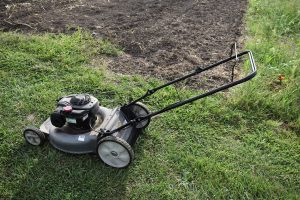 Use a Push Mower When:
- Your lawn is small (under ¼–½ acre)
- Terrain is flat and simple
- You want a low-cost, low-maintenance option
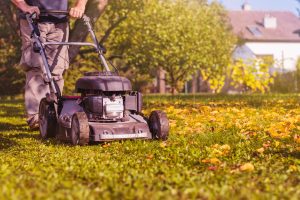 Use a Residential Self-Propelled Mower When:
- You have a medium-sized lawn
- Terrain includes hills or uneven ground
- You want reduced effort without going commercial
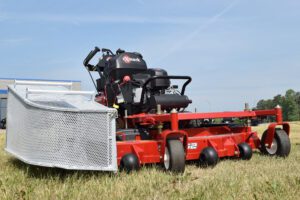 Use a Commercial Walk-Behind Mower When:
- You mow large or multiple properties
- You need durability and efficiency
- Terrain is complex or includes slopes
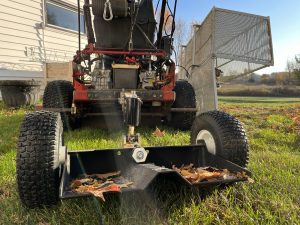 Add a Sulky When:
- You want to reduce fatigue
- You need higher productivity
- You want riding capability without upgrading to a full riding mower
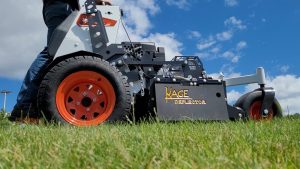 Choose a Stand-On Mower When:
- You prioritize speed and large-area coverage
- You regularly mow wide, open properties
- Budget allows for a dedicated riding solution
The evolution from push mowers to commercial walk-behind systems—and even to stand-on mowers—reflects one key idea: efficiency matters.
Push mowers still serve a purpose for small, simple lawns. Residential self-propelled mowers bridge the gap for homeowners who want convenience. But commercial walk-behind mowers, especially when paired with sulkies like the KAGE Wheel Kaddy, deliver a level of versatility and productivity that few other machines can match.
For professionals and serious property owners, a walk-behind mower with a sulky offers a unique advantage: the ability to switch between walking and riding while maintaining precision and control. That flexibility is what sets it apart—not just from push mowers, but even from dedicated stand-on machines.
Recent Comments