
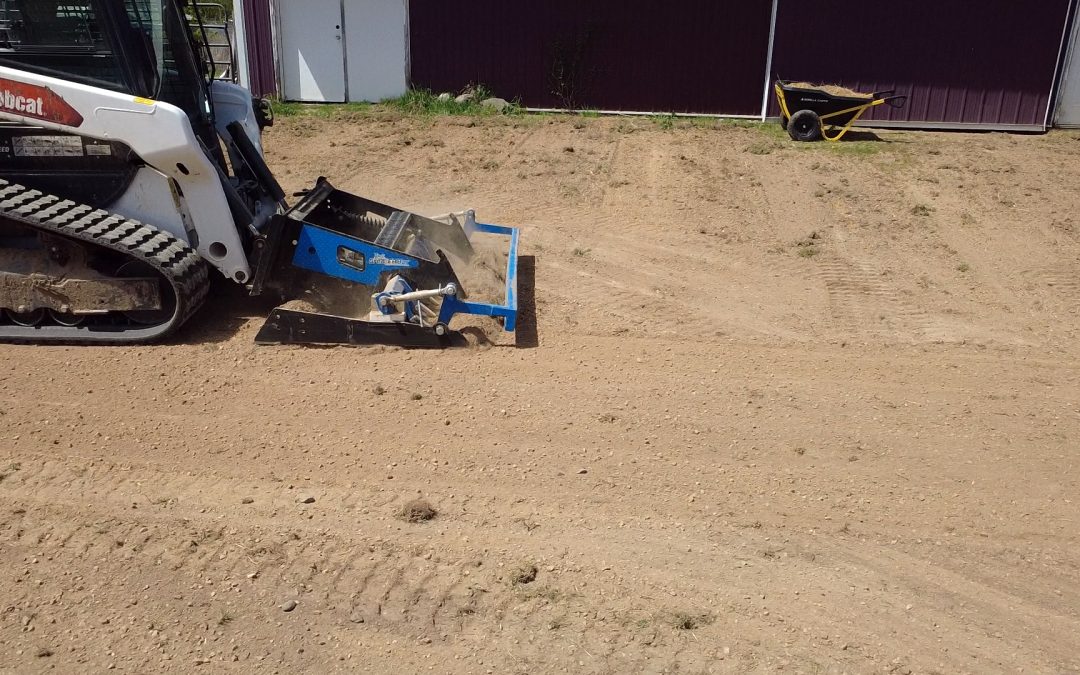
Gravel roads and driveways are a practical and cost-effective solution for rural properties, farms, construction sites, campgrounds, and even commercial lots. But over time, gravel surfaces inevitably begin to deteriorate. Potholes form, washboarding develops, drainage suffers, and valuable aggregate disappears beneath compacted layers of dirt and fines. That’s where gravel rejuvenation comes in.
Rather than completely replacing a driveway or road, gravel rejuvenation focuses on restoring and reconditioning the existing surface. When done correctly, it can dramatically extend the life of the surface while reducing maintenance costs. However, like any maintenance strategy, gravel rejuvenation has both advantages and limitations.
The good news is that modern equipment—especially innovative attachments like the KAGE GreatER Bar—has made the rejuvenation process faster, easier, and more effective than ever before.
What Is Gravel Rejuvenation?
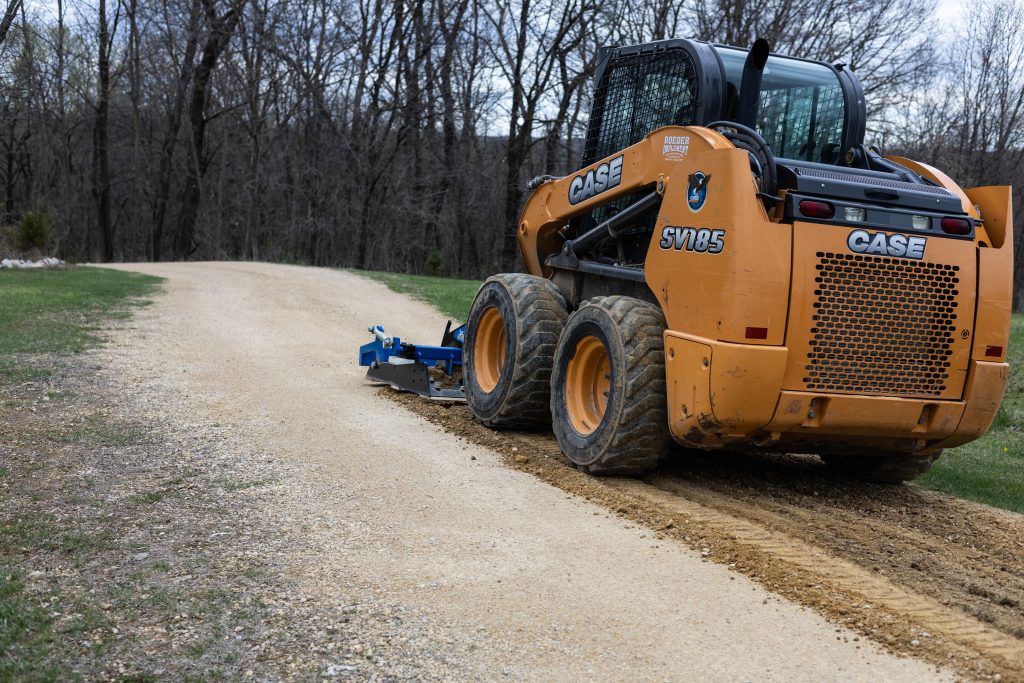
Gravel rejuvenation is the process of restoring an existing gravel surface by loosening compacted material, redistributing aggregate, reshaping the driving surface, and improving drainage. Instead of simply adding fresh gravel on top of damaged areas, rejuvenation attempts to recycle and reuse as much existing material as possible.
A proper rejuvenation process typically includes:
- Breaking up compacted gravel
- Pulling buried stone back to the surface
- Filling potholes and low spots
- Re-establishing proper crown and drainage
- Smoothing and leveling the surface
This process can be performed on gravel roads, driveways, parking lots, trails, and other aggregate surfaces.
The Pros of Gravel Rejuvenation
1. Significant Cost Savings
One of the biggest advantages of gravel rejuvenation is reduced material cost. Gravel is expensive to purchase, transport, and spread—especially for long rural driveways or private roads. Rejuvenation minimizes the need for fresh material by reclaiming and reusing existing aggregate already in place.
Instead of hauling in multiple truckloads of new gravel every season, operators can loosen buried stone and redistribute it where it’s needed most.
For municipalities, contractors, and property owners, this can translate into substantial long-term savings.
2. Improved Drainage
Poor drainage is often the root cause of gravel surface failure. Standing water weakens the road base and accelerates pothole formation.
A proper rejuvenation process restores the crown and grading of the road so water sheds efficiently to the edges.
When drainage improves:
- Potholes form less frequently
- Washboarding decreases
- Surface erosion is minimized
- The gravel lasts longer overall
3. Better Driving Surface
Few things are more frustrating than driving on a severely washboarded gravel road. Corrugation, ruts, and potholes make driving uncomfortable and increase wear on vehicles.
Rejuvenation smooths and levels the surface, creating:
- Better ride quality
- Improved traction
- Safer driving conditions
- Reduced vehicle wear and tear
4. Environmentally Friendly
Reusing existing gravel reduces the need for quarrying, hauling, and additional material production. By recycling what’s already present, rejuvenation helps reduce fuel usage and environmental impact.
This can be especially beneficial for large properties or municipalities trying to reduce operational costs and emissions.
5. Faster Than Full Replacement
Completely rebuilding a gravel road is expensive and time-consuming. Rejuvenation offers a much quicker alternative that still delivers substantial improvement.
With the right equipment, many gravel maintenance projects can be completed in just a few passes.
The Cons of Gravel Rejuvenation
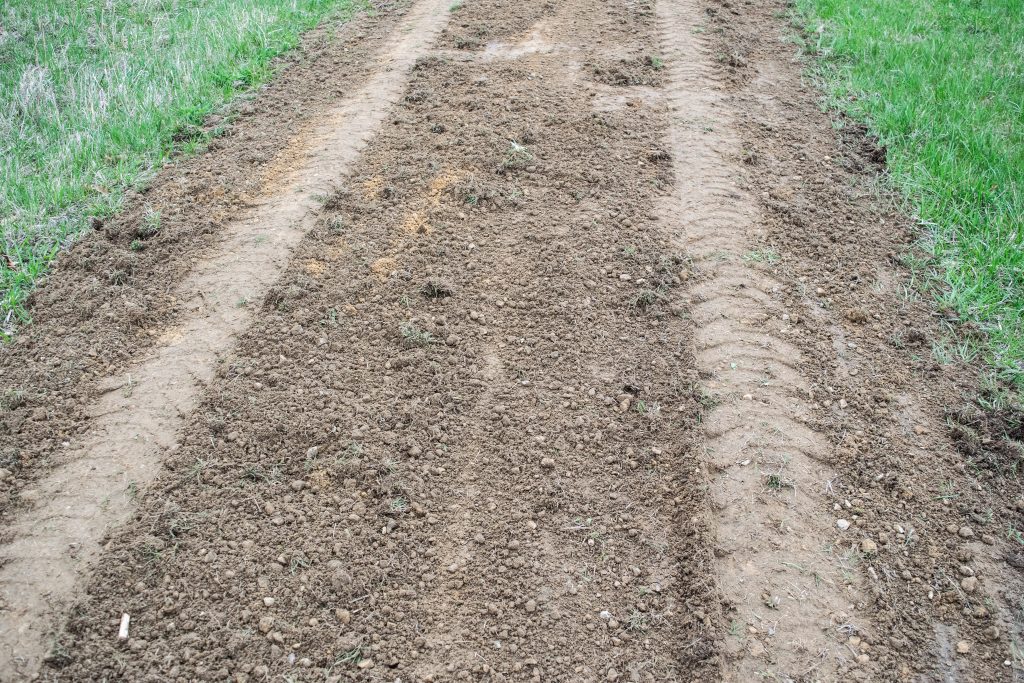
While rejuvenation offers many benefits, it is not a perfect solution for every situation.
1. Severely Damaged Roads May Need Reconstruction
If the base beneath the gravel has failed, rejuvenation alone may not solve the problem. Roads with major drainage failures, deep erosion, or insufficient gravel depth may require additional material or complete reconstruction.
Rejuvenation works best when there is still enough usable aggregate remaining in the surface.
2. Requires Proper Technique
Simply dragging a tool across the surface is not enough. Improper grading can worsen drainage problems or create uneven surfaces.
Operators need to understand:
- Crown formation
- Gravel distribution
- Surface moisture conditions
- Scarifying depth
- Equipment setup
Without proper technique, the benefits may only be short term.
3. Compacted Gravel Can Be Difficult to Break Up
One of the biggest challenges in gravel rejuvenation is loosening hard-packed material. Over time, gravel becomes compacted almost like concrete, especially on high-traffic surfaces.
Traditional grading equipment sometimes struggles to penetrate these surfaces effectively, leading to inefficient maintenance and excessive passes.
4. Frequent Maintenance May Still Be Necessary
Even after rejuvenation, gravel surfaces still require periodic upkeep. Heavy traffic, snow removal, rain, and freeze-thaw cycles will continue to affect the surface over time.
However, consistent rejuvenation can dramatically reduce the severity and cost of future maintenance.
How the KAGE GreatER Bar Helps Solve These Challenges
This is where the KAGE GreatER Bar truly stands out.
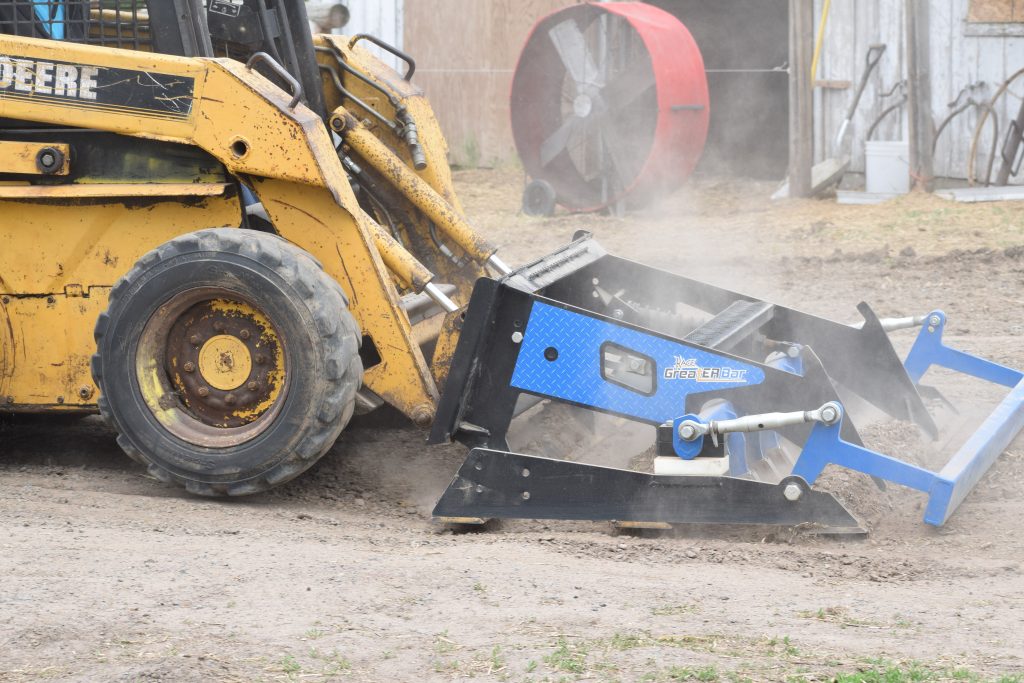
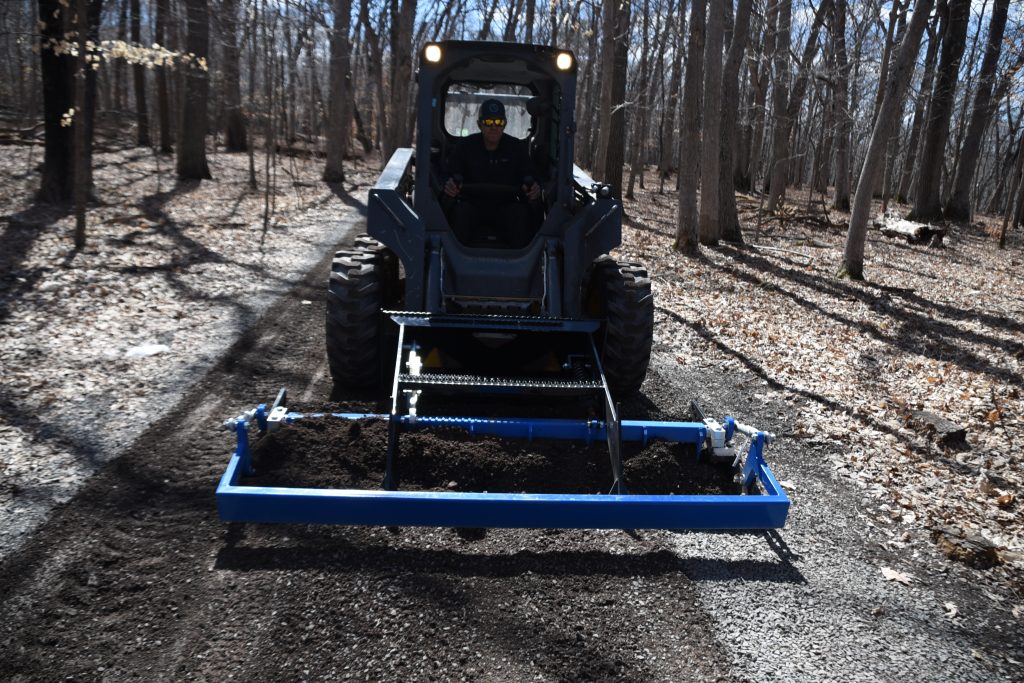
The KAGE GreatER Bar is a purpose-built land plane and gravel rejuvenation attachment designed to simplify and improve the entire maintenance process. Unlike many traditional grading tools, it combines scarifying, leveling, and smoothing into one efficient workflow.
Efficient Material Reclamation
One of the key strengths of the GreatER Bar is its ability to reclaim buried gravel. Its aggressive ripper teeth loosen compacted surfaces and bring usable aggregate back to the top layer.
This reduces dependence on new gravel while restoring the integrity of the surface.
Mechanical Quick Rip System
Traditional land planes often require hydraulic hookups or manual ripper adjustments. The KAGE GreatER Bar features a patented mechanically activated Quick Rip Bar that allows operators to deploy or retract the ripper teeth without leaving the cab and without hydraulics.
This offers several advantages:
- Faster operation
- Reduced downtime
- Fewer hydraulic failure points
- Greater operator convenience
Automatic Reverse Retraction
The spring-loaded ripper teeth automatically retract when reversing and re-engage when moving forward.
This feature improves efficiency and helps prevent unnecessary digging or damage during operation.
Reduced Passes and Faster Results
Traditional methods often require multiple tools:
- One tool for scarifying
- Another for leveling
- Another for finishing
The GreatER Bar combines these functions into a streamlined process that reduces labor, fuel consumption, and machine hours.
For contractors, this means:
- Faster project completion
- Increased productivity
- Higher profitability
Built for Tough Conditions
The GreatER Bar is designed with heavy-duty construction and HARDOX™ steel wear components for durability in demanding environments.
It performs well on:
- Gravel roads
- Driveways
- Parking lots
- Horse arenas
- Construction sites
- Dirt trails
- Even icy gravel surfaces during winter
Gravel rejuvenation is one of the smartest ways to extend the life of gravel roads and driveways while reducing long-term maintenance costs. By reclaiming existing material, improving drainage, and restoring surface quality, property owners and contractors can avoid the high expense of complete reconstruction.
However, successful rejuvenation depends heavily on the right equipment. Compacted gravel, potholes, and washboarding can quickly overwhelm traditional grading tools.
That’s why innovative attachments like the KAGE GreatER Bar have become increasingly valuable. Its ability to scarify, level, redistribute, and smooth surfaces efficiently makes it an ideal solution for modern gravel maintenance.
Whether you maintain a rural driveway, a commercial gravel lot, or miles of private roads, investing in the right gravel rejuvenation equipment can save time, reduce costs, and dramatically improve results for years to come.
Recent Comments