
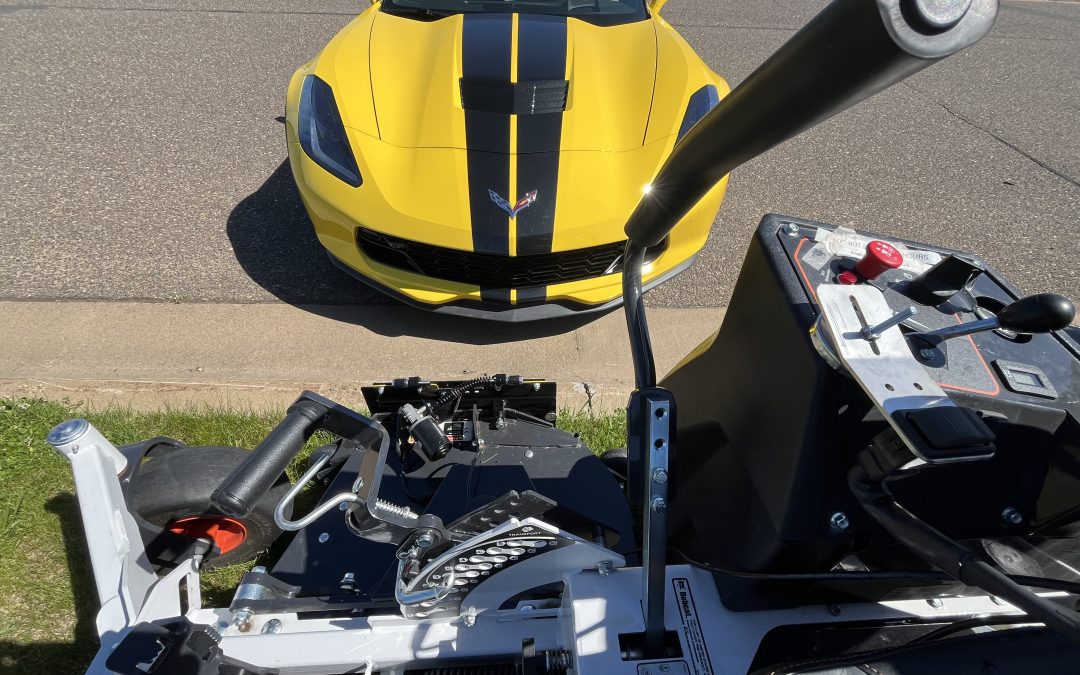
Why Controlling Grass Clippings and Debris Matters
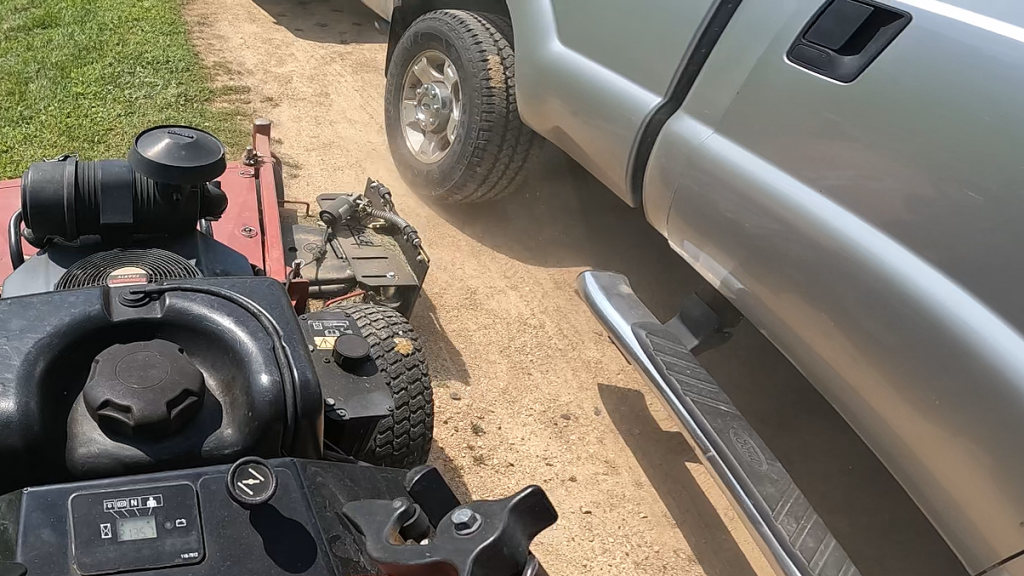
When most people think about lawn mowing safety, they often focus on obvious concerns such as avoiding obstacles, preventing slips, or maintaining equipment properly. However, one of the most overlooked hazards in lawn maintenance is the uncontrolled discharge of grass clippings, rocks, sticks, and other debris—especially when mowing around vehicles.
Whether you’re a homeowner maintaining your property, a landscaping professional servicing multiple clients, or a groundskeeper responsible for commercial facilities, understanding the risks associated with mower discharge can help prevent costly damage, improve safety, and create a cleaner, more professional-looking result.
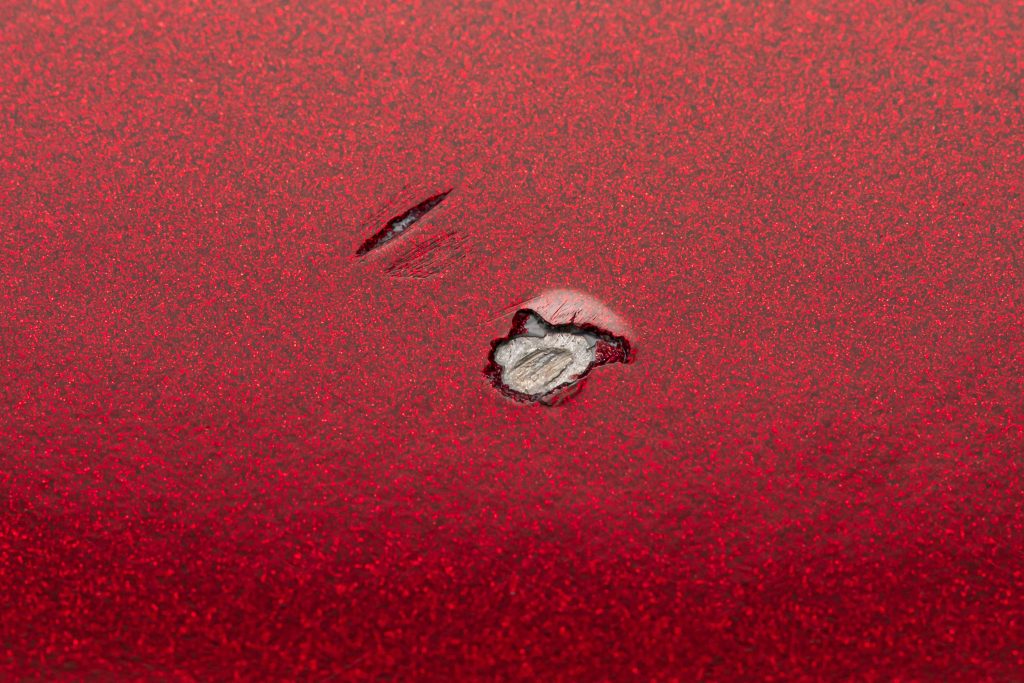
The Real Cost of Flying Debris
Modern lawn mowers are powerful machines designed to efficiently cut and discharge grass. Along with clippings, however, mower blades can propel rocks, gravel, mulch, sticks, pinecones, and other hidden objects at surprisingly high speeds.
When mowing near parked cars, trucks, trailers, recreational vehicles, or equipment, these projectiles can cause significant damage, including:
- Chipped or cracked windshields
- Scratched paint and clear coats
- Dented body panels
- Damaged mirrors and lights
- Broken windows
- Cosmetic damage that lowers vehicle value
Even a small pebble launched from beneath a mower deck can create repair costs ranging from hundreds to thousands of dollars. For landscaping contractors, a single incident can quickly erase profits from multiple jobs and potentially damage customer relationships.
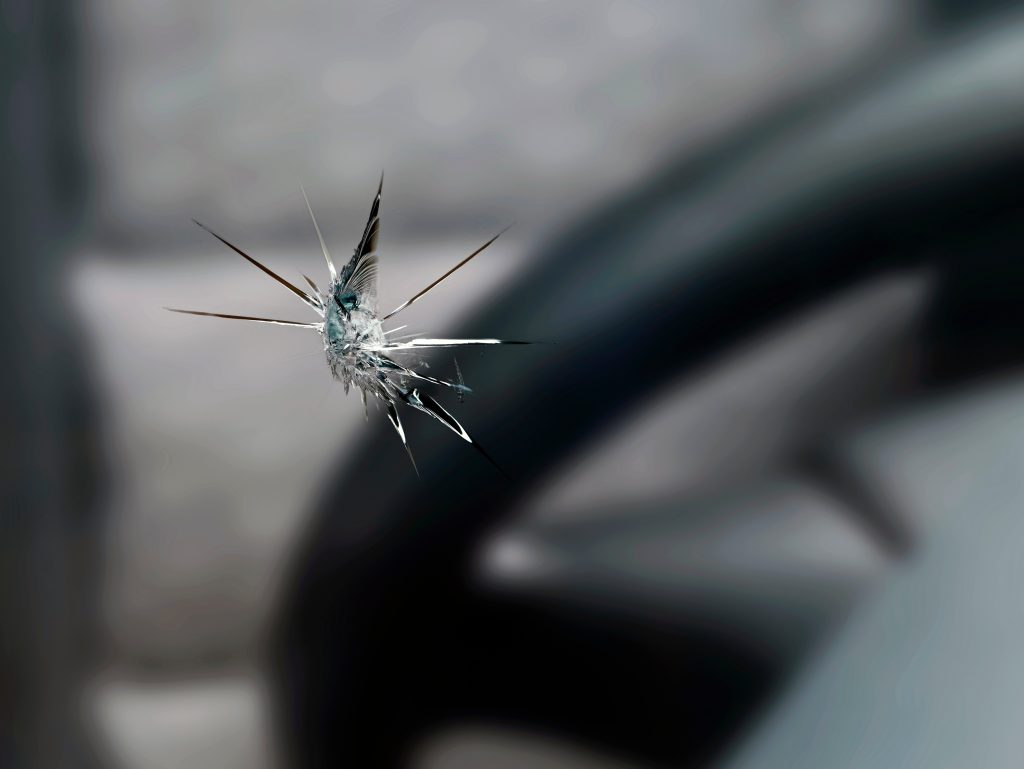
Liability Risks for Landscaping Professionals
Professional lawn care companies face additional risks when debris strikes a vehicle. Property owners expect contractors to exercise reasonable care while working around their homes and businesses.
If a mower sends debris into a parked vehicle, the landscaping company may be responsible for:
- Repair expenses
- Insurance claims
- Increased premiums
- Customer disputes
- Negative online reviews
- Damage to company reputation
In today’s world of online reviews and social media, one preventable incident can have lasting consequences. Professional operators understand that controlling discharge is not simply a matter of appearance—it’s a matter of risk management.
 Grass Clippings Create More Than Cosmetic Problems
While rocks and sticks present obvious dangers, grass clippings themselves can also create issues when discharged toward vehicles.
Freshly cut grass contains moisture, organic acids, and plant material that can stick to vehicle surfaces. When left on paint for extended periods, grass residue can become difficult to remove and may contribute to staining or discoloration.
Additional problems include:
- Clogged vehicle air intakes
- Reduced visibility from grass-covered windshields
- Debris accumulation around wipers
- Unsightly appearance on freshly washed vehicles
For commercial properties, dealerships, apartment complexes, and office parks, grass-covered vehicles can create a poor impression for tenants, customers, and visitors.
Safety Risks Beyond Vehicle Damage
The hazards of uncontrolled mower discharge extend beyond property damage.
Flying debris can injure:
- Vehicle occupants
- Pedestrians
- Nearby workers
- Children playing outdoors
- Customers entering or exiting buildings
Objects ejected from a mower can travel considerable distances and strike unsuspecting individuals. Eye injuries, cuts, bruises, and more serious accidents can occur when debris is not properly controlled.
For this reason, many professional landscapers take extra precautions when mowing near parking lots, roadways, sidewalks, and occupied areas.
Why Operator Awareness Matters
One of the simplest ways to reduce mowing-related damage is maintaining awareness of mower discharge direction.
Before mowing near vehicles, operators should:
- Inspect the area for rocks, sticks, and loose debris.
- Identify vehicles and vulnerable property nearby.
- Adjust mowing patterns to direct discharge away from vehicles.
- Slow down when working in tight spaces.
- Use equipment designed to improve discharge control.
While these practices are effective, they can be difficult to maintain consistently, especially when working under tight schedules or in areas with limited maneuvering room.
That’s where equipment solutions can make a significant difference.
The Importance of Controlling Grass Clipping Distribution
Controlling where grass clippings and debris are distributed provides several advantages:
Improved Safety
By directing discharge away from vehicles, buildings, and people, operators significantly reduce the risk of injury and property damage.
Better Appearance
Strategic clipping management prevents unsightly piles of grass on driveways, sidewalks, landscaping beds, and vehicles. The result is a cleaner, more professional finish.
Reduced Cleanup Time
When clippings are controlled at the source, less time is spent blowing off vehicles, pavement, and surrounding areas after mowing.
Greater Professionalism
Customers notice attention to detail. Contractors who consistently leave properties clean and damage-free build trust and enhance their reputation.
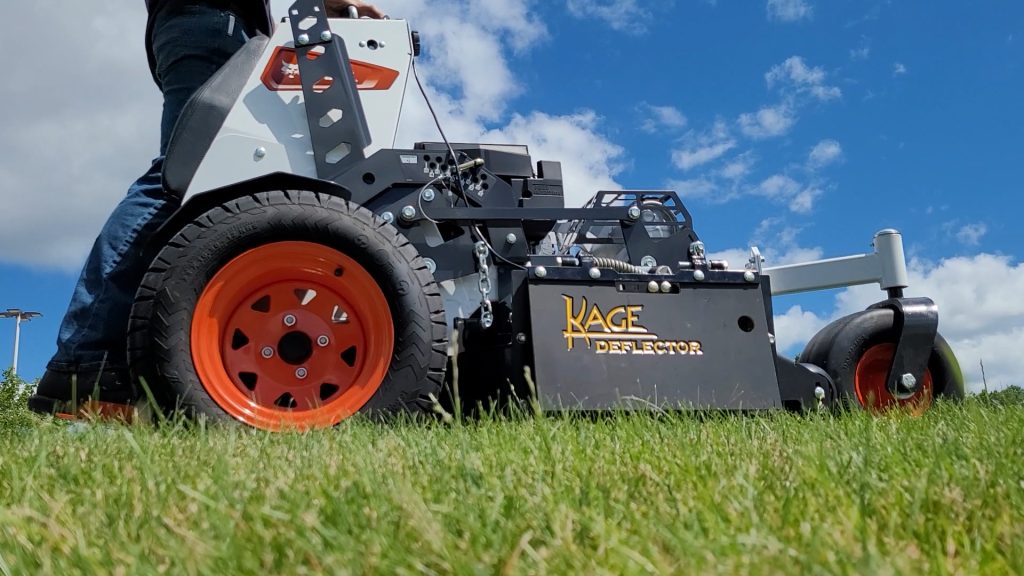
How the KAGE Grass Deflector Helps Control Debris and Protect Property
When mowing around vehicles, buildings, equipment, and other valuable property, having precise control over mower discharge can make a significant difference in both safety and efficiency. The KAGE Grass Deflector was engineered specifically to provide operators with that control while incorporating multiple layers of protection designed to reduce the risk of damage.
Superior Discharge Control
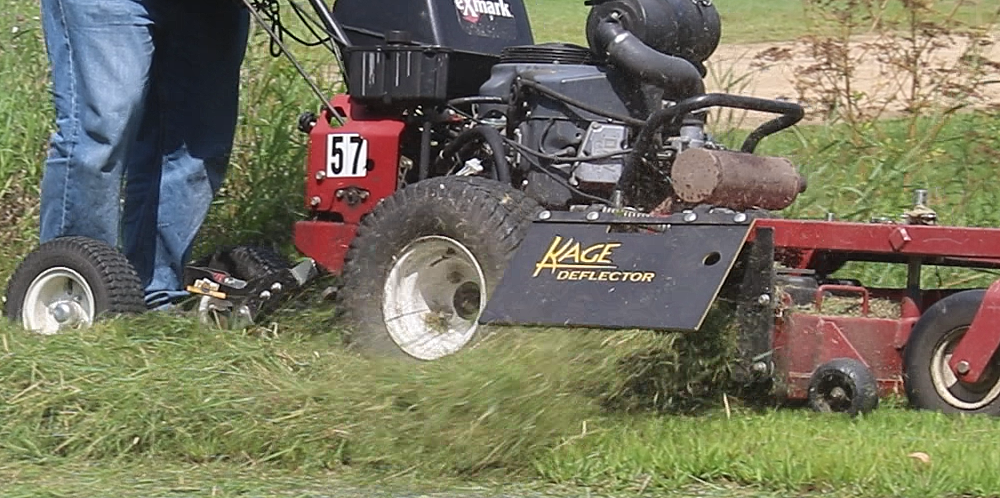
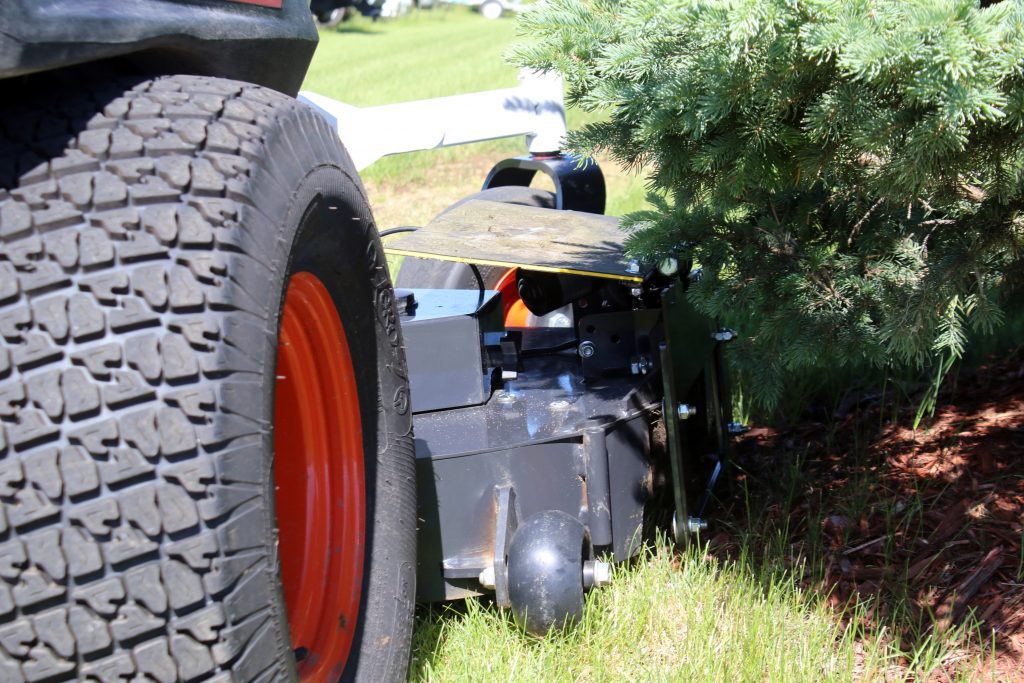
The KAGE Grass Deflector allows operators to quickly adjust the mower’s discharge opening to control where grass clippings and debris are directed. Whether working near parked vehicles, landscaping beds, sidewalks, roadways, or other sensitive areas, operators can make immediate adjustments to match changing conditions.
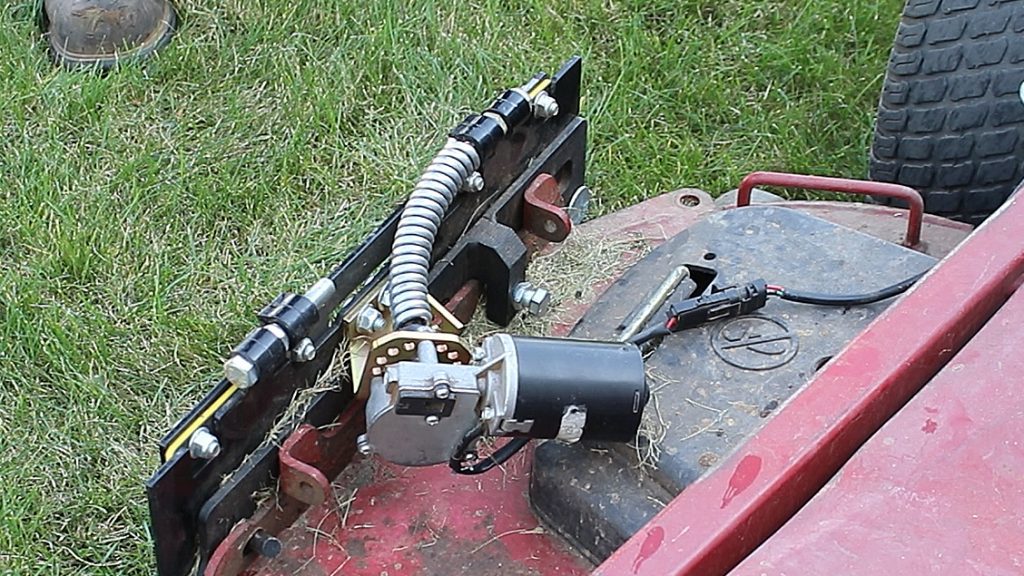
Unlike manual systems that require stopping or physically repositioning a chute, the KAGE Grass Deflector features motorized controls that allow the flap position to be adjusted rapidly and precisely from the operator’s seat. This enables users to react instantly as mowing conditions change, directing clippings exactly where they are wanted while avoiding areas where debris could become a problem.
Torsion Spring Protection System
One of the most important safety features of the KAGE Grass Deflector is its torsion spring design.
The torsion spring serves two critical functions:
First, it provides a breakaway mechanism when the flap comes into contact with obstacles. If the deflector encounters a tree, fence post, sign, landscaping feature, or other obstruction, the spring allows the flap to move away from the object rather than transferring the full impact force into the mower deck or mounting system. This helps protect both the equipment and the obstacle from unnecessary damage.
Second, the torsion spring actively clamps the flap tightly against the mower discharge chute whenever the flap is in the closed position. This tight seal is extremely important because it helps prevent rocks, sticks, and other projectiles from escaping through gaps between the flap and the mower deck. By maintaining consistent pressure against the chute opening, the system creates a more secure barrier that helps contain potentially dangerous debris.
Engineered to Fail Safely
Another unique safety advantage of the KAGE Grass Deflector is the material used in the flap itself.
The flap is constructed from a durable plastic material that is intentionally designed to act as a sacrificial component under extreme circumstances. While the torsion spring allows the flap to break away from many impacts, there are situations where the geometry of an impact may not allow the spring mechanism to fully absorb the force.
For example, if the deflector is accidentally left open and makes direct contact with a parked vehicle, trailer, building, or other object in a way that limits the spring’s ability to pivot, the plastic flap is designed to break before causing more extensive damage elsewhere.
This approach offers several important benefits:
- Helps reduce the risk of costly damage to vehicles and property.
- Protects the mower deck and mounting components from absorbing excessive impact forces.
- Minimizes repair costs by allowing a lower-cost component to fail before more expensive equipment is damaged.
- Provides an additional layer of protection beyond the spring breakaway mechanism.
In essence, the system is engineered with multiple levels of protection designed to minimize the consequences of accidental contact.
Cleaner Results and Reduced Liability
Beyond the mechanical safety features, the KAGE Grass Deflector helps operators maintain cleaner properties by controlling where grass clippings are distributed. This prevents clippings from being blown onto parked vehicles, driveways, sidewalks, roadways, and landscaped areas where they may create cleanup issues or an unprofessional appearance.
For landscaping professionals, this translates into:
- Reduced risk of vehicle damage claims.
- Lower liability exposure.
- Faster cleanup times.
- Improved customer satisfaction.
- A more professional finished appearance.
A Smarter Solution for Professional Mowing
The combination of motorized control, torsion spring breakaway protection, tight chute sealing, and sacrificial flap construction makes the KAGE Grass Deflector much more than a simple discharge blocker. It is a purpose-built system designed to help operators safely manage mower discharge while protecting vehicles, property, and equipment from unnecessary risk.
For professionals who mow around expensive vehicles and customer property every day, having this level of control and protection can provide valuable peace of mind while helping deliver cleaner, safer, and more professional results.
Vehicle repairs are expensive. Customer complaints are time-consuming. Insurance claims can be frustrating and costly.
Investing in tools that help control mower discharge can pay dividends through reduced liability, improved efficiency, and greater customer satisfaction.
For landscaping companies, the ability to minimize risks while maintaining a polished appearance can become a competitive advantage. For homeowners, it provides peace of mind when mowing near personal vehicles, garages, boats, campers, and other valuable assets.
Mowing around vehicles presents risks that are often underestimated until damage occurs. Flying debris, uncontrolled grass clippings, and poor discharge management can lead to expensive repairs, safety concerns, and dissatisfied customers.
By understanding these hazards and taking proactive steps to control where grass clippings and debris are distributed, operators can significantly improve both safety and results.
Solutions like the KAGE Grass Deflector provide an effective way to gain greater control over mower discharge, helping protect vehicles, enhance property appearance, and reduce the likelihood of costly incidents.
In lawn care, prevention is always less expensive than repair. Controlling mower discharge isn’t just a convenience—it’s an essential part of responsible and professional mowing.
Recent Comments