
Technology has revolutionized transportation and roadside maintenance. From GPS mapping to telematics and fleet automation, operators of snow plow trucks and tractors now have a suite of tools to help them work more efficiently, safely, and reliably in challenging conditions. Among these tools, eye safe laser guidance systems are emerging as a quiet but powerful force multiplier — particularly when it comes to minimizing damage and boosting situational awareness in low visibility conditions.
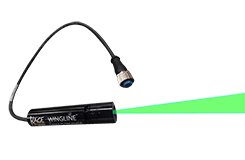
One system in particular — the KAGE WingLine™ laser guide — has gained attention for its practicality, ease of use, and, importantly, its thoughtful attention to safety at a low entry cost. Unlike high-power lasers used in industrial or construction applications, the WingLine employs a Class IIIR (IIIa) laser, designed to strike a balance between visibility and safe power levels. But what does all this mean? And why is it important for roadway operations, drivers, and the general public? Let’s explore.
Lasers on the Road: What Are They Used For?
When municipal road crews head out after a winter storm, one of their chief concerns isn’t just pushing snow — it’s avoiding costly collisions with fixed objects such as mailboxes, guardrails, parked vehicles, and roadside signs. These often lurk just outside the operator’s sightline, especially when the wing plow or tractor implement extends significantly beyond the cab.
Traditionally, operators have relied on mirrors and trial-and-error positioning to determine where the edge of a wing plow is relative to nearby obstacles. This inevitably leads to neck strain, reduced focus on the road ahead, and a high risk of “wing strikes” — where the plow hits something unintended.
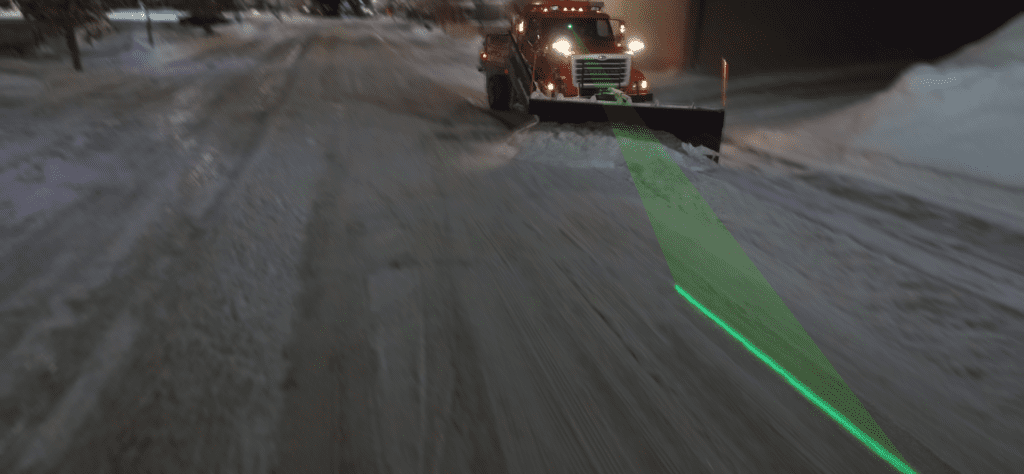
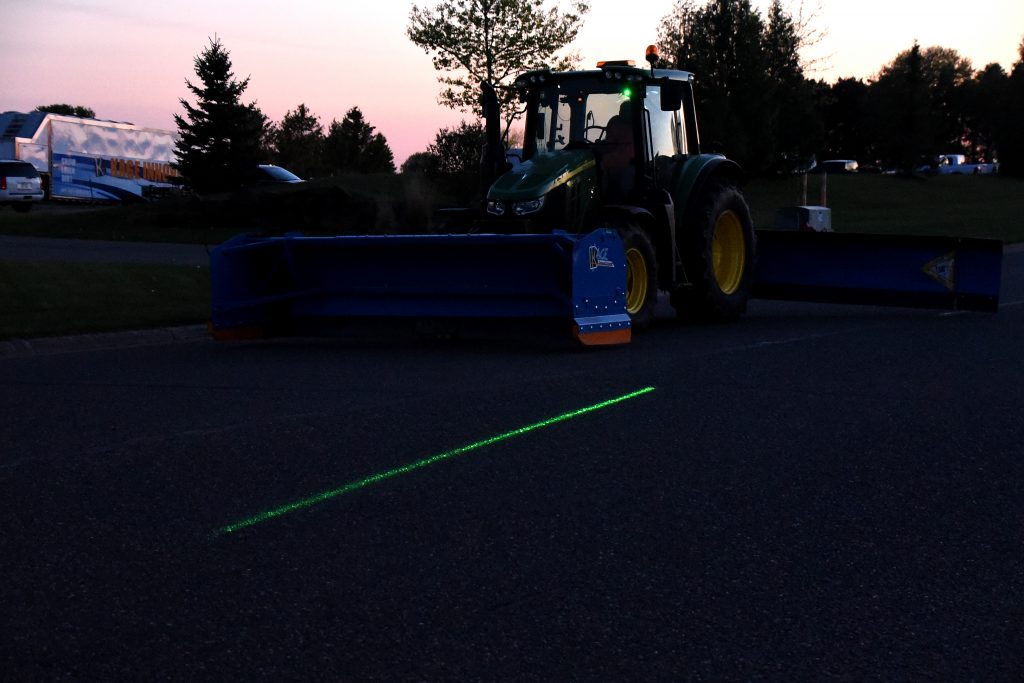
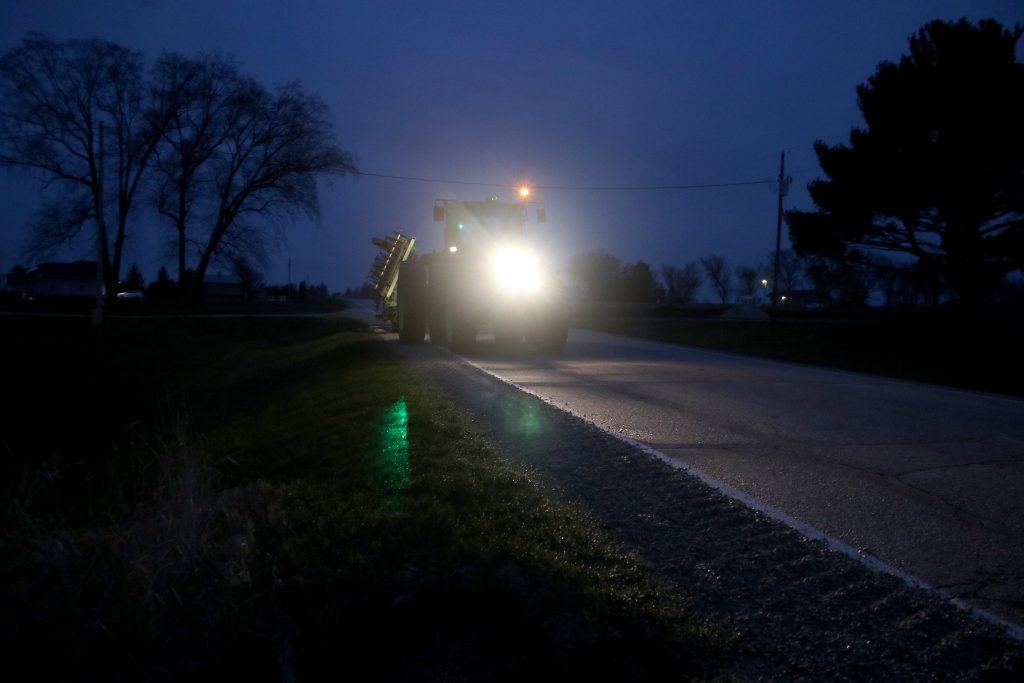
Eye safe laser guidance systems like the KAGE WingLine solve this by projecting a bright green laser line onto the surface ahead of the vehicle — visible from the operator’s seat — that effectively marks the trailing edge of the implement. This gives the operator advance visual feedback on where the wing plow or implement will travel, long before it reaches that point.
This kind of guidance not only reduces damage to roadside infrastructure but also greatly improves operator confidence and reduces fatigue during long shifts.
 Understanding Laser Classifications — Why Class IIIR Matters
Not all lasers are created equal. Laser classification systems — such as those defined by the FDA and international standards — categorize lasers based on their output power and potential for harm. These classifications help users understand risk and determine safety measures.
Broadly, laser classes range from Class 1 (eye-safe under all conditions) to Class 4 (high power; dangerous to eyes and skin). Class IIIR (also known as Class IIIa) sits in the middle of this spectrum:
-
Class IIIR lasers typically emit visible light at power levels between about 1 and 5 milliwatts.
-
These lasers are considered low risk when used responsibly, especially in systems where the beam is not directed at people’s eyes for extended periods.
-
While any direct laser beam should be avoided, Class IIIR lasers normally won’t cause eye injury with short, incidental exposure because the natural blink and aversion reflex protects the eye.
This is key for on-road applications. The WingLine’s Class IIIR laser is powerful enough to produce a clear, visible line on snow, pavement, or gravel surfaces — even in low light — without the risk profile of higher-powered lasers that could injure someone’s eye under longer direct exposure.
Note: Despite the relative safety of Class IIIR lasers, all laser products should still follow manufacturer instructions and avoid intentionally pointing the beam at people’s eyes. This is good practice and aligns with safety guidelines.
How the KAGE WingLine Makes Laser Guidance Practical and Safe
There are a few design and implementation choices that help make the WingLine a practical tool for roadway equipment operators:
1. In-Cab Mounting and Eye-Safe Orientation
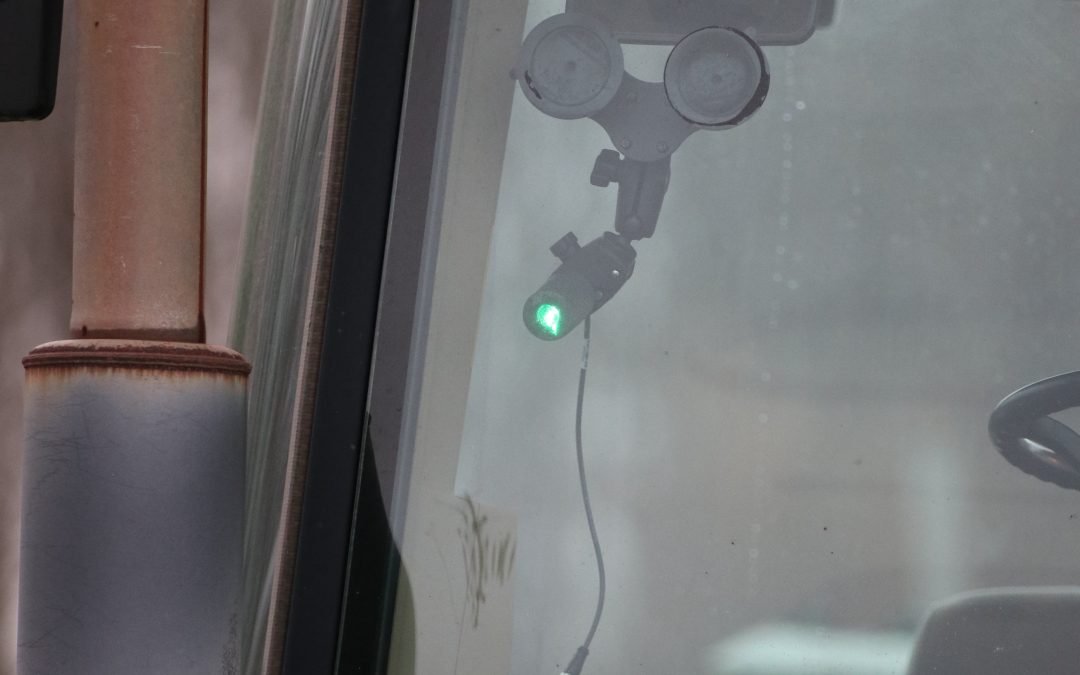
Unlike some other high-power lasers that are exposed to the elements, the WingLine is typically mounted inside the equipment cab — often behind the windshield. This protects the eye safe laser from snow, ice, debris, and salt spray, all of which could degrade performance over time.
Since it is mounted inside and the beam projects forward onto the surface ahead, the risk of directing laser light toward bystanders or oncoming traffic is inherently reduced. The placement also ensures the beam is oriented in a direction relevant to the operator, not toward other road users.
2. Self-On/Off Switch Integration
No operator should have to fiddle with extra switches in the middle of winter. The WingLine offers a smart switch connected to the wing plow deployment system so that the laser automatically turns on when the plow wing extends and turns off when it retracts.
This smart control increases operator awareness — the laser becomes both guidance and alert that the wing is deployed — without adding complexity.
3. Brightness and Visibility Balanced With Safety
The green wavelength used by the WingLine is chosen for visibility. The human eye is most sensitive to green wavelengths, making this color especially effective at night or in dim conditions.
By keeping output within Class IIIR limits, WingLine designers ensure that this visibility does not come at the cost of a dangerous beam. The beam is bright enough to see on snow or pavement but not powerful enough to carry the rigorous hazard potential of higher-class lasers.
4. Maintenance-Free Operation
Modern lasers can be finicky if not built for rough conditions. The WingLine uses a sealed, reliable module that doesn’t require frequent maintenance, reducing the chance that an operator might misadjust or misalign the laser — critical for sustained safety and accuracy.
Benefits Beyond the Beam: Real-World Impact
The benefits of integrating a safe laser guidance system like the WingLine go beyond just projecting a beam:
-
Fewer property damage incidents: With better visual guidance, operators can avoid mailboxes, vehicles, fences, and guardrails.
-
Reduced operator fatigue: No more craning their neck to see where the wing plow ends — operators can keep their eyes forward and stay alert.
-
Lower liability and maintenance costs: Fewer strikes mean fewer claims, repairs, and downtime.
-
Better performance in challenging conditions: In the fog, snow, darkness, or glare of winter, a consistent laser line provides predictable guidance.
Conclusion: A Laser-Guided Path to Safer Road Maintenance
The adoption of lasers like the KAGE WingLine in roadway maintenance equipment represents an intelligent blend of safety, technology, and operational effectiveness. By leveraging a Class IIIR laser — a classification that offers sufficient power for visibility but is inherently safer for incidental eye exposure — manufacturers have given operators an effective tool without adding undue risk to bystanders or oncoming traffic.
This combination of operator guidance, communication of wing position, and eye safety awareness makes systems like WingLine crucial innovations in how we maintain and protect our roads — especially in winter. As infrastructure challenges grow and technology continues to evolve, tools like this will play an important role in keeping our roads safer and our equipment more reliable — one safe laser line at a time.
Recent Comments