
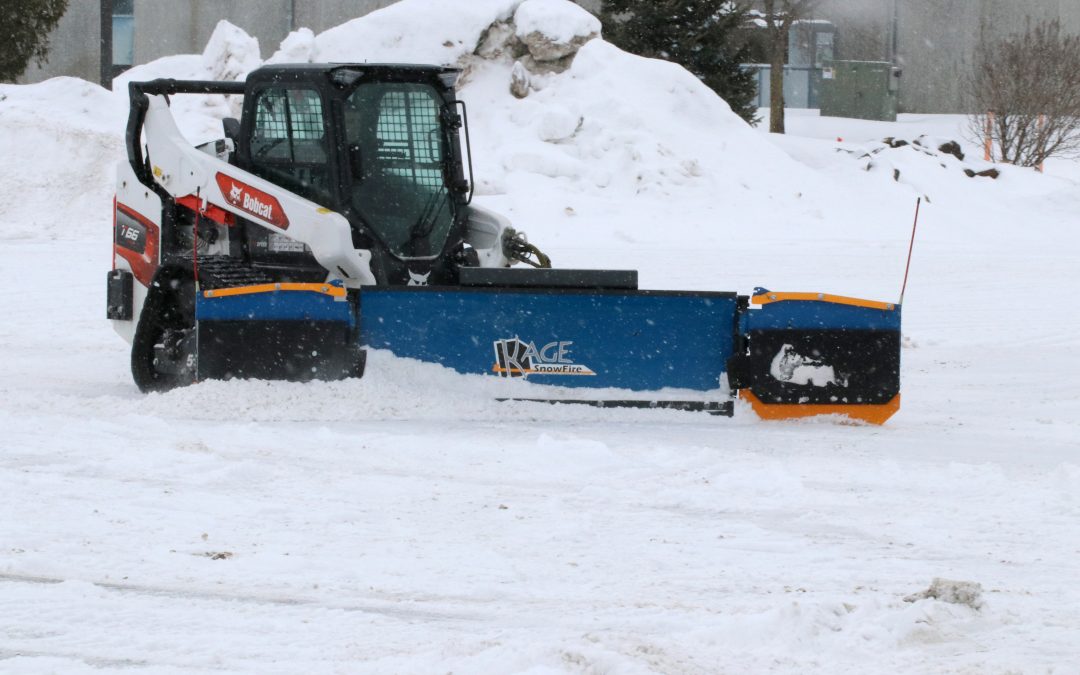
When winter arrives, snow removal becomes a critical task for property owners, contractors, and facility managers. But while clearing snow efficiently is essential, preserving the integrity and appearance of the underlying surface is just as important—especially in high-end or sensitive environments. This is where polyurethane (poly) snow plow and pusher contact surfaces prove their value. By replacing traditional steel cutting edges and skid shoes with polyurethane, operators can dramatically reduce damage, prevent long-term surface issues, and deliver a cleaner, more professional result.
The Hidden Downsides of Steel Contact Components
Steel cutting edges and shoes have long been the standard in snow removal due to their scrape, toughness and wear resistance. However, they come with several overlooked drawbacks—particularly when used on sensitive or finished surfaces.
One major issue is surface damage. Steel is rigid and unforgiving, meaning it does not adapt well to uneven or delicate substrates. This can lead to scratching, chipping, or gouging, especially on decorative or coated surfaces.
Another, less obvious problem is residue transfer. As steel edges scrape across pavement, they can leave behind microscopic metal particles. Initially, this may go unnoticed. But over time, exposure to moisture and air causes these particles to oxidize, resulting in rust stains. These stains can appear days or even weeks later, leaving unsightly discoloration that is difficult—and sometimes costly—to remove. For property owners who prioritize aesthetics, this can be a major concern.
Steel also introduces noise, vibration, and long-term wear on both equipment and surfaces. But perhaps most critically, it poses a serious risk to structural features like expansion joints.
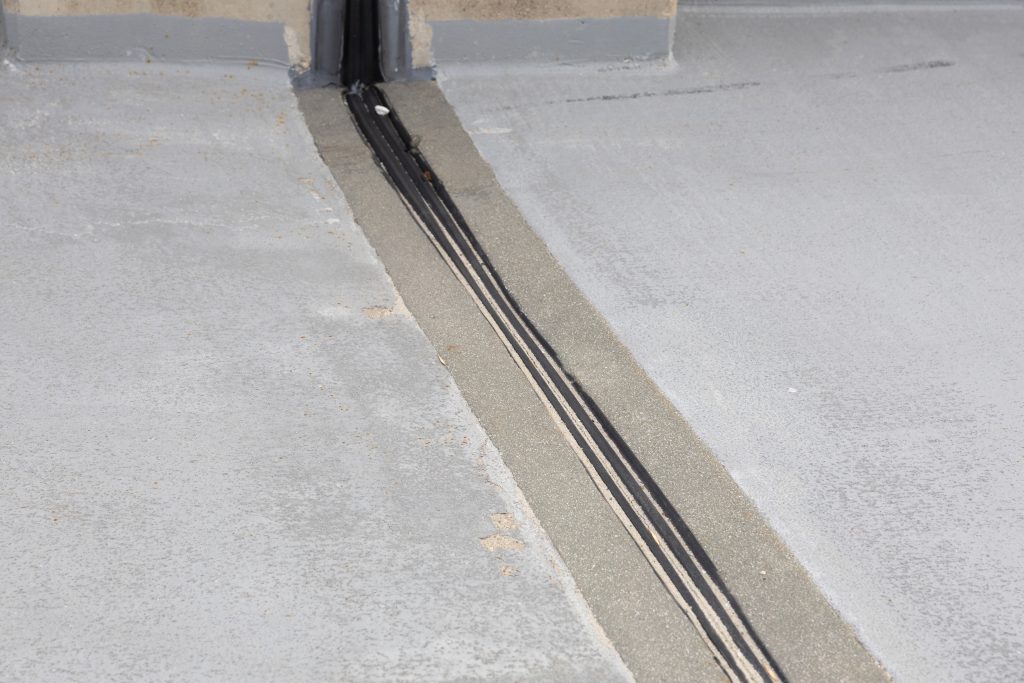
Expansion Joints: A Critical Weak Point
Expansion joints are designed to allow concrete slabs—especially in environments like parking garages—to expand and contract with temperature changes. While essential for structural integrity, these joints are also vulnerable.
Steel cutting edges and skid shoes can:
- Catch on joint edges
- Chip or break joint materials
- Dislodge joint fillers or seals
- Accelerate wear through repeated impact
In parking garages, where expansion joints are frequent and often include protective membranes or sealants, this damage can lead to water infiltration, corrosion of underlying structures, and expensive repairs.
Polyurethane, on the other hand, offers a much safer alternative.
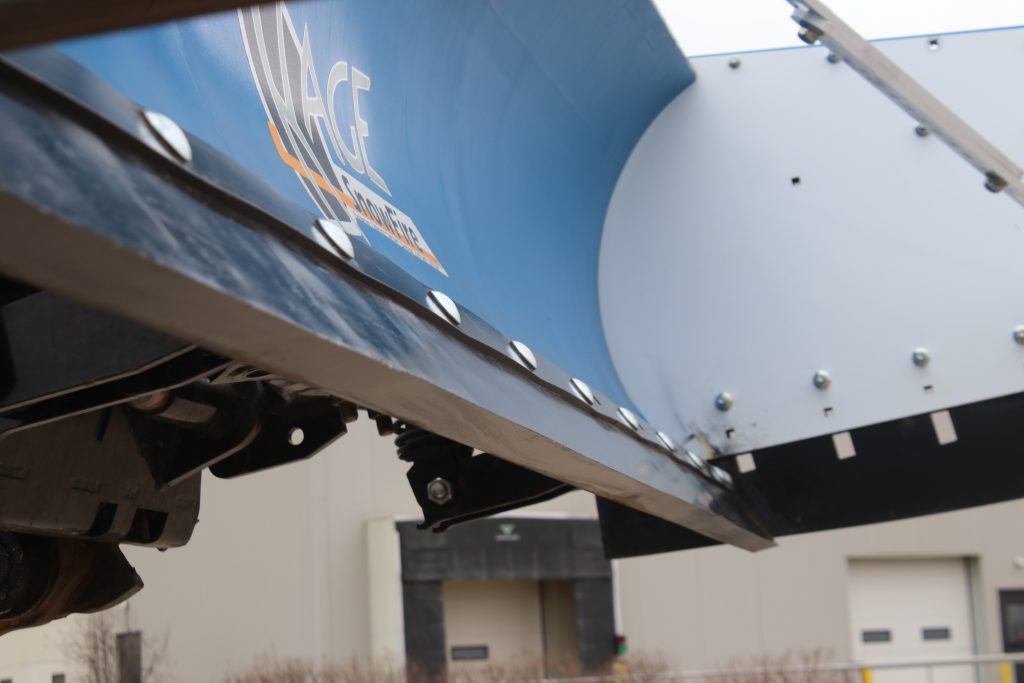
Why Polyurethane Makes the Difference
Polyurethane is engineered to provide durability with flexibility. Unlike steel, it has a slight give, allowing it to conform to surface variations without aggressive scraping.
When all contact points—cutting edges, skids, and wear surfaces—are made of polyurethane, the system delivers several key benefits:
- No rust-causing residue: Poly does not shed metal particles, eliminating the risk of delayed rust staining.
- Gentle interaction with expansion joints: Poly glides over joints instead of catching or chipping them.
- Reduced surface damage: Its flexibility minimizes scratching, gouging, and coating wear.
- Quieter operation: Less noise and vibration improve operator comfort and reduce disturbance in residential or commercial areas.
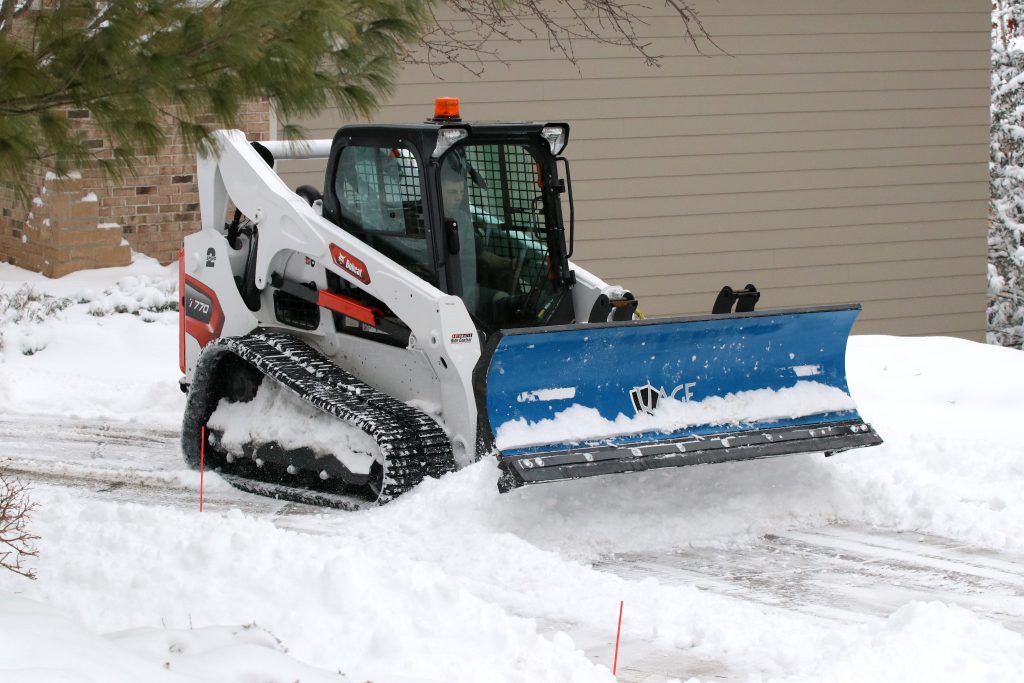
Surfaces That Benefit Most from Poly Contact Systems
Certain environments demand this level of protection. Polyurethane contact systems are especially valuable on:
Decorative Concrete
Stamped or stained concrete surfaces are highly susceptible to scratching and discoloration.
- Benefit: Poly prevents both physical damage and rust staining, preserving the intended look.
Paver Driveways and Walkways
Uneven joints and edges make pavers vulnerable to steel blades.
- Benefit: Poly rides smoothly over transitions without catching or shifting pavers.
Parking Garages
These structures often include coatings, membranes, and numerous expansion joints.
- Benefit: Poly protects both the surface coatings and the joints themselves, preventing costly structural issues.
Sports Courts and Tracks
Facilities like tennis courts, basketball courts, and running tracks require pristine surfaces including consistent texture and appearance.
- Benefit: Non-marking poly eliminates scuffs and residue.
Brick and Historic Surfaces
Older materials are often irreplaceable.
- Benefit: Poly ensures preservation without compromising snow removal effectiveness.
Performance Without Compromise
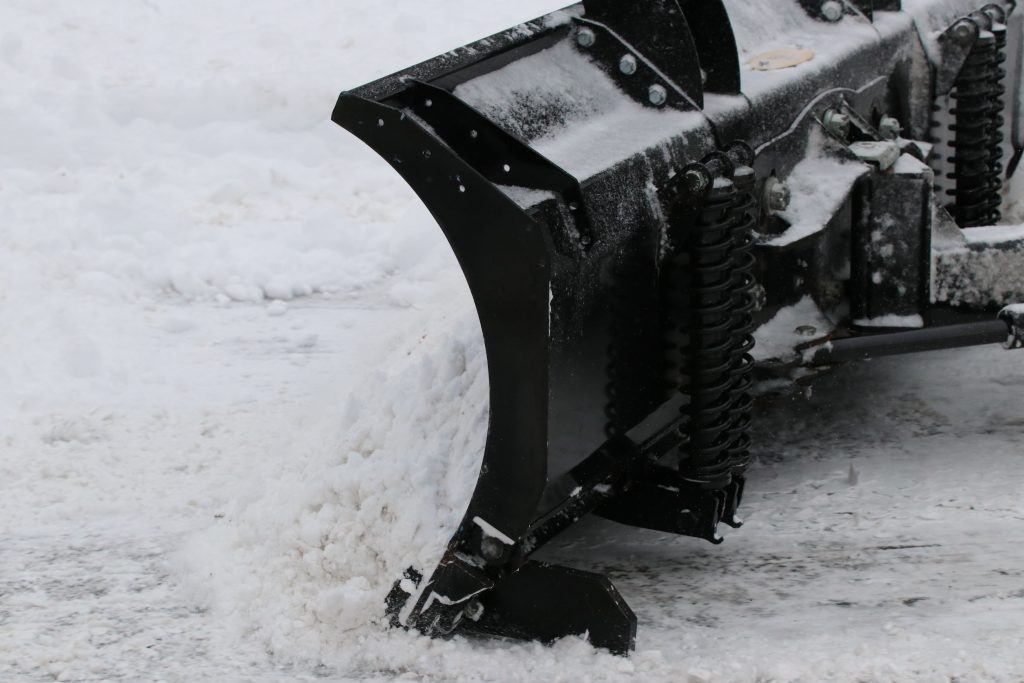
There’s a common misconception that switching to polyurethane means sacrificing scraping performance. In reality, modern poly systems are engineered to maintain excellent ground contact and deliver a clean scrape—especially when designed as a complete system. While it’s true that steel will perform better at removing hard snow pack or ice, polyurethane cutting edges are excellent at scraping fresh snow – light or heavy.
Poly cutting edges maintain consistent contact across uneven surfaces, while poly skids distribute weight more evenly. The result is efficient snow removal with significantly less risk.
The KAGE Advantage: Full Poly Contact Systems
This is where KAGE Innovation stands out.
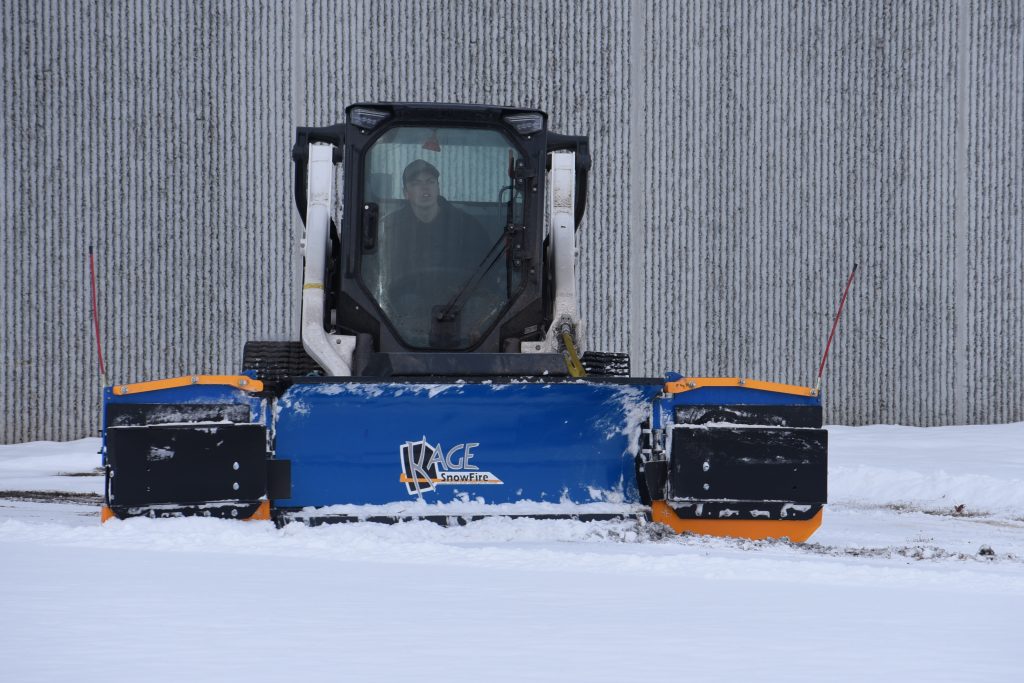
All KAGE SnowFire Series plows and pushers are available with full polyurethane contact surfaces. That means every component that touches the ground—cutting edges and skids —is designed to work together as a unified, surface-friendly system.
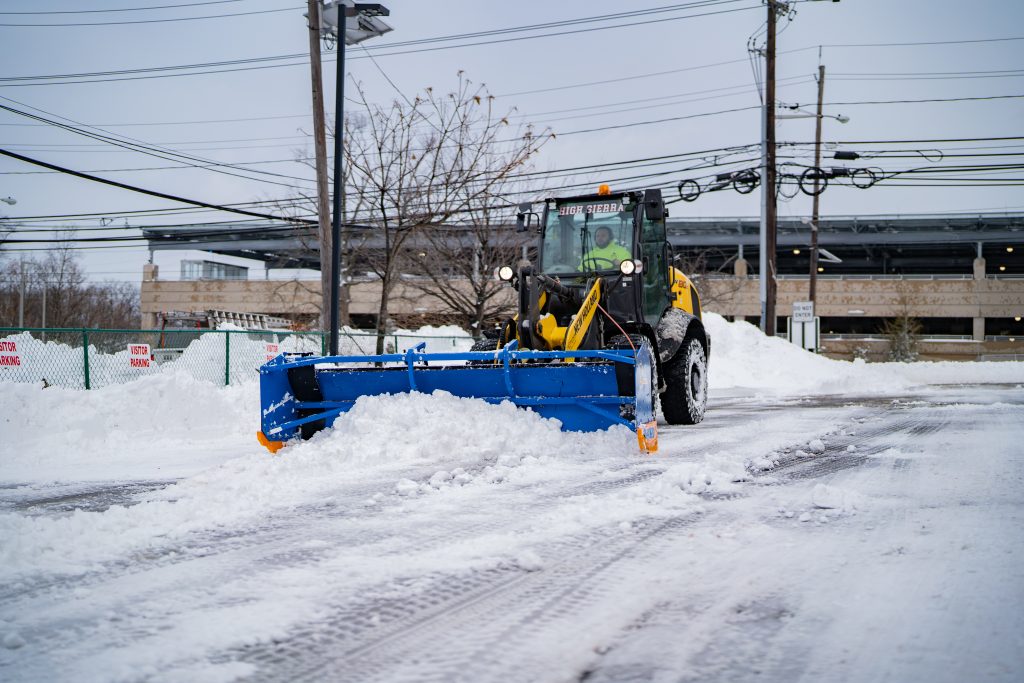 This capability spans the entire SnowFire lineup, including:
- 2-in-1 Plow Systems (Standard and Xtreme)
- BLAST Pushers
- Wing Plows
With a KAGE SnowFire, operators can confidently clear snow from even the most sensitive environments without worrying about scratching, gouging, or leaving behind rust-prone residue.
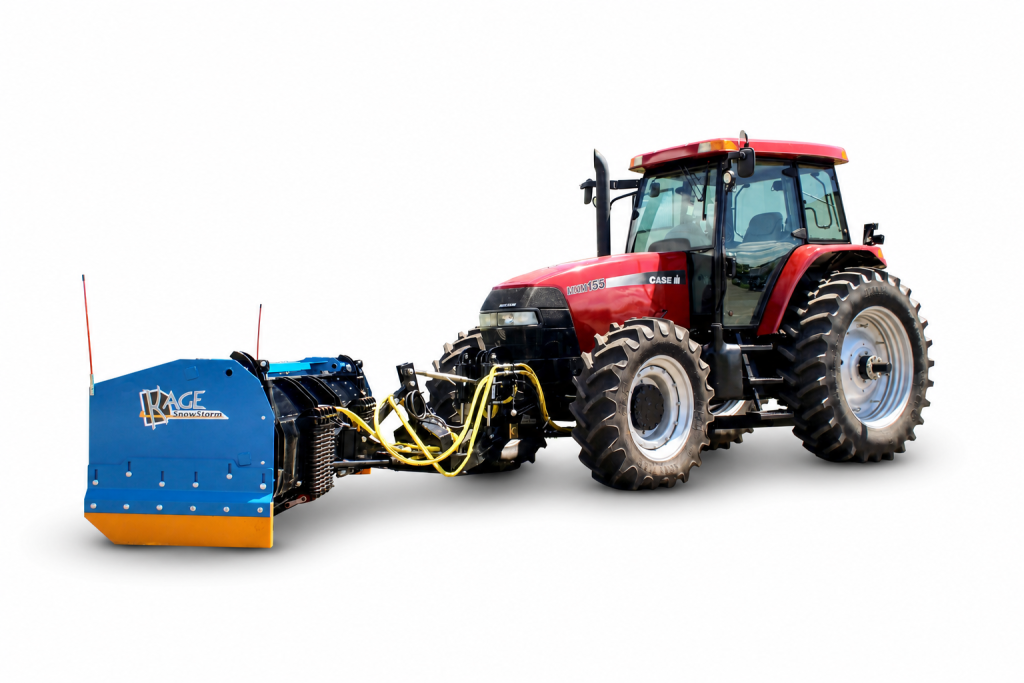 KAGE extends this same commitment to versatility with its SnowStorm Series, offering polyurethane skid and cutting edge options across:
- SnowStorm 2-in-1 Plows and Pushers
- SnowStorm BLAST Pushers, featuring floating poly skids
The floating poly skid system is particularly valuable in environments like parking garages. It allows the plow to adapt dynamically to surface contours and expansion joints, maintaining smooth, even contact while avoiding concentrated pressure that could cause damage.
 Why Full Poly Contact Matters
It’s important to note that partial solutions—such as using a poly cutting edge with steel skids—don’t fully eliminate risk. Steel components can still:
- Damage expansion joints
- Leave behind rust-causing residue
- Create uneven wear patterns
KAGE’s full poly approach ensures that every contact point contributes to a consistent, protective performance.
A Smarter Investment
For contractors, using full poly systems means fewer callbacks, happier clients, and the ability to service premium properties with confidence. For property owners, it means protecting their investment—not just during the storm, but long after it has passed.
Snow removal is no longer just about clearing surfaces—it’s about doing so responsibly and intelligently. Steel still has its place in rugged applications, but for sensitive environments, it introduces risks that can’t be ignored—from immediate surface damage to delayed rust staining and compromised expansion joints.
Polyurethane contact systems solve these problems at their source.
With KAGE’s SnowFire Series leading the industry in full poly contact design—and SnowStorm Series options expanding that capability—operators can achieve the perfect balance of performance and protection.
Because the best snow removal job isn’t just the one that clears the snow—it’s the one that leaves the surface exactly as it was meant to be.
Recent Comments