
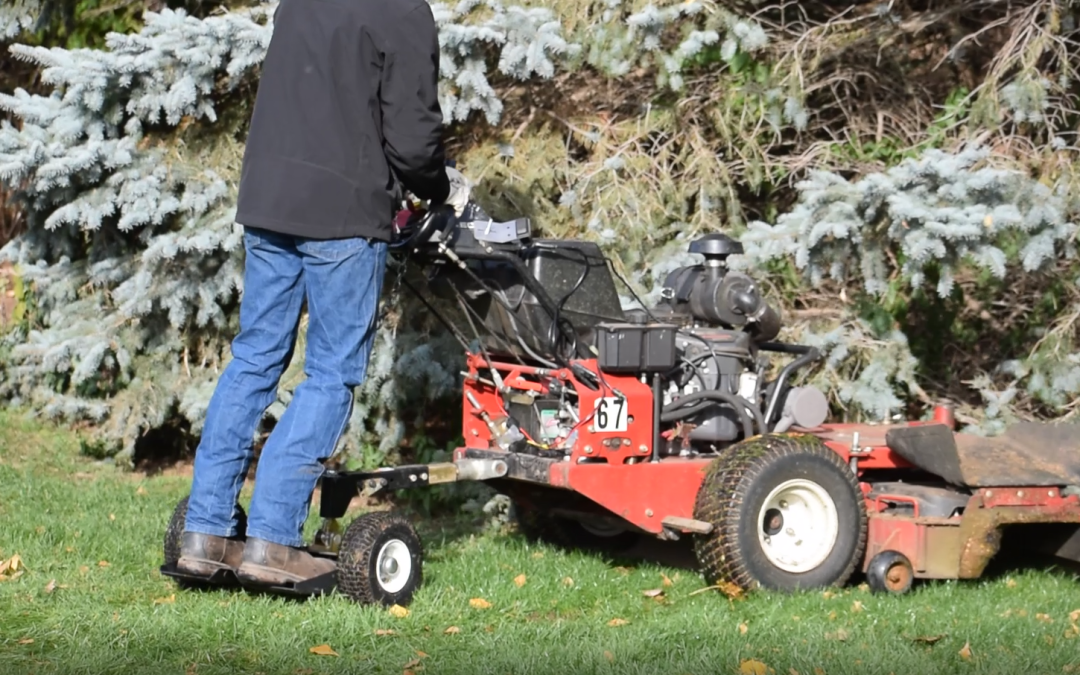
Commercial landscaping crews spend countless hours trimming around trees, islands, fence lines, and other obstacles. While open turf can be covered quickly with larger zero-turn mowers, trees—especially low-branching evergreens like spruce trees—often slow down productivity and create operator fatigue. In these situations, commercial walk-behind mowers – with proper sulkies – continue to prove their value as one of the most efficient and versatile tools in professional lawn care.
When paired with the right sulky, a commercial walk-behind mower becomes even more productive, helping operators maintain speed and reduce fatigue while still preserving the maneuverability needed to work around tight landscaping features. For properties with mature spruce trees, exposed roots, uneven terrain, and low-hanging branches, this combination can dramatically improve mowing efficiency and operator comfort.
Why Walk-Behind Mowers Excel Around Trees
Low-branching trees create unique mowing challenges. Spruce trees, for example, often have branches that extend nearly to the ground. These branches reduce visibility, limit operator movement, and make it difficult for larger riding equipment to maneuver without damaging limbs or scalping turf.
Commercial walk-behind mowers solve many of these problems because of their compact footprint and superior maneuverability.
Unlike larger zero-turn riders, walk-behind mowers allow operators to:
- Duck under low branches more easily
- Maintain tighter turning control around trunks
- Reduce turf damage in confined spaces
- Access areas larger machines cannot reach
- Navigate root-heavy terrain with greater precision
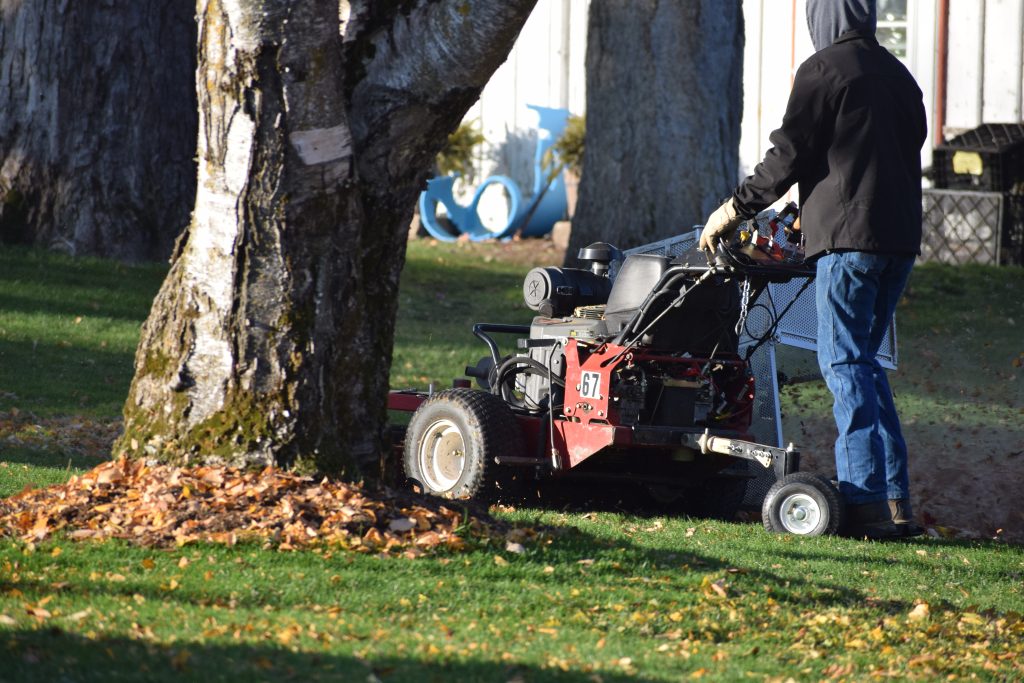
One of the biggest advantages of a walk-behind mower around trees is operator positioning. On a zero-turn mower, the operator sits directly on top of the machine, which increases the overall height of the equipment and limits how far the mower deck can reach beneath low branches.
With a commercial walk-behind mower, the operator stands behind the mower instead of on top of it. This allows the mower deck itself to travel much farther underneath spruce branches and other low-hanging limbs while the operator remains outside the canopy. In many situations, crews can mow significantly farther beneath trees without ducking excessively or risking branch contact to the operator.
This added reach becomes especially valuable when mowing around mature spruce trees where branches may hang close to the turf. A walk-behind mower can often cut cleanly underneath areas that would force a zero-turn operator to stop short, leaving uncut grass that later requires trimming.
The operator’s position behind the mower also provides better visibility when weaving around landscaping obstacles. This becomes especially important around spruce trees where branches may obscure sightlines or force awkward operating angles.
For commercial crews maintaining parks, apartment complexes, golf course edges, cemeteries, or residential estates with mature evergreens, walk-behind mowers often become the preferred choice for detail-oriented mowing work.
The Physical Demands of Walk-Behind Mowing
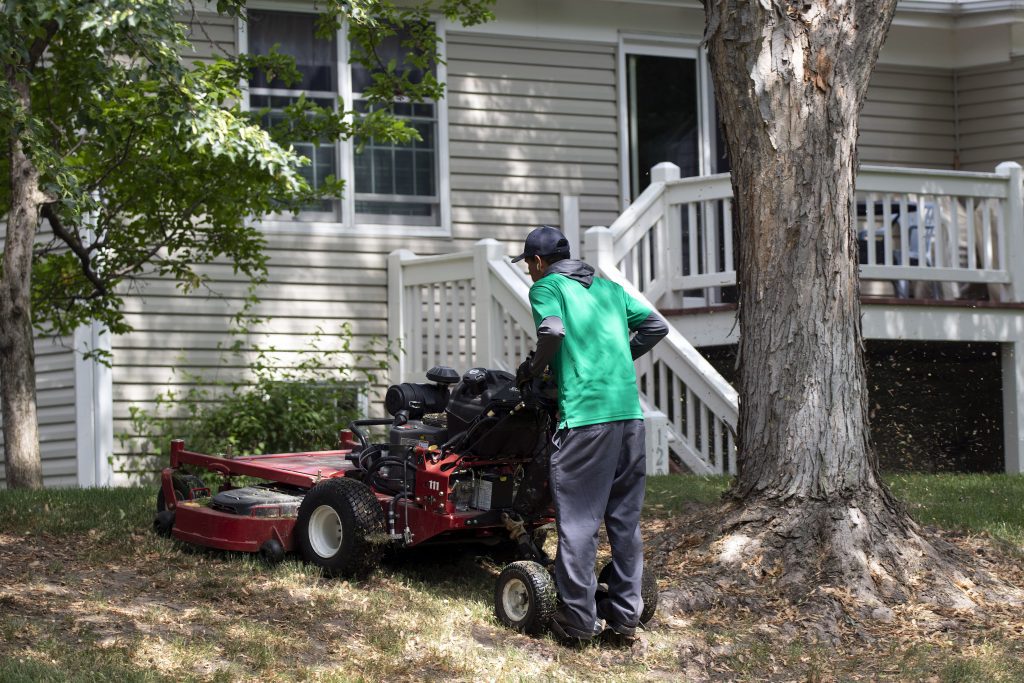
While walk-behind mowers offer exceptional control, they can also be physically demanding over long workdays. Operators may spend hours walking behind heavy equipment across uneven ground, slopes, roots, and rough terrain.
That’s where a sulky becomes a major advantage.
A sulky attaches to the rear of the mower and allows the operator to ride instead of walk. This reduces fatigue, increases productivity, and helps crews maintain consistent mowing speeds throughout the day.
For contractors managing large properties with numerous trees or obstacle-heavy landscapes, a sulky can significantly improve operational efficiency.
However, not all sulkies perform the same in difficult mowing conditions. Terrain type, maneuverability requirements, and operator preference all play important roles in selecting the right setup.
How the KAGE Wheel Kaddy Walk Behind Sulky Improves Productivity
The KAGE Wheel Kaddy lineup was designed specifically to improve the performance and comfort of commercial walk-behind mowers. By giving operators a stable riding platform while maintaining the agility of a walk-behind mower, the Wheel Kaddy helps crews cover more ground with less fatigue.
This is especially useful around spruce trees and landscapes with:
- Exposed roots
- Uneven terrain
- Mulch edges
- Tight tree spacing
- Low branches
- Soft ground conditions
Instead of repeatedly stepping on and off the mower or trudging through rough areas all day, operators can ride comfortably while still maintaining precise control.
Two popular configurations in the lineup—the Wheel Kaddy 500 and the Wheel Kaddy 360—offer different advantages depending on the mowing environment and operator preferences.
An important advantage of both the Wheel Kaddy 500 and Wheel Kaddy 360 is that both models feature suspension systems. Suspension plays a major role in reducing vibration and shock transfer to the operator, especially when mowing over roots, bumps, and rough commercial properties. Around mature spruce trees where shallow roots often create uneven turf conditions, suspension helps improve operator comfort and reduces fatigue during long workdays.
The Advantages of the Wheel Kaddy 500 Walk Behind Sulky
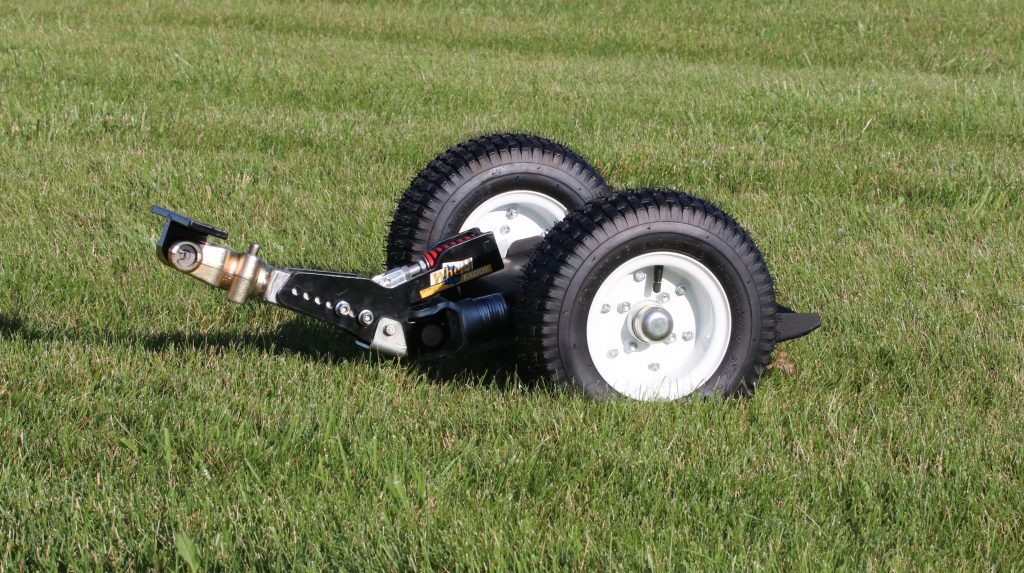
The Wheel Kaddy 500 is known for its larger tires and stable ride quality. Those larger pneumatic tires make a noticeable difference when mowing over rough ground, exposed roots, and uneven terrain commonly found around mature trees.
Properties with spruce trees often develop shallow root systems that create bumps and raised areas in the turf. Smaller wheels can bounce harshly over these surfaces, but the larger tires on the Wheel Kaddy 500 help absorb impacts and maintain smoother travel.
Combined with the built-in suspension system, the larger tire setup delivers a comfortable ride even in challenging mowing conditions.
Advantages of the Wheel Kaddy 500 include:

Improved Ride Quality
The larger tires roll more smoothly over roots, bumps, ruts, and rough terrain, helping reduce operator fatigue during long mowing sessions.
Better Stability
On uneven commercial properties, the wider, larger wheel setup can provide a more planted feel, especially at higher mowing speeds.
Increased Efficiency on Large Properties
For expansive landscapes where operators spend long periods riding rather than constantly maneuvering in tight spaces, the smoother ride can help improve overall productivity.
Enhanced Comfort
The combination of suspension and larger tires helps minimize bouncing and jolting throughout the day.
However, the Wheel Kaddy 500 does require more operator skill when backing up.
Because the sulky pivots traditionally behind the mower, backing maneuvers can sometimes lead to jackknifing if the operator turns too sharply while reversing. Around tight landscaping beds or closely spaced spruce trees, inexperienced users may need additional practice to maneuver efficiently in reverse.
That tradeoff is important to understand. Operators gain a smoother ride and better bump absorption, but they also need to be more deliberate when backing in confined areas.
For experienced crews working larger commercial sites with rough terrain, the Wheel Kaddy 500 can be an excellent productivity tool.
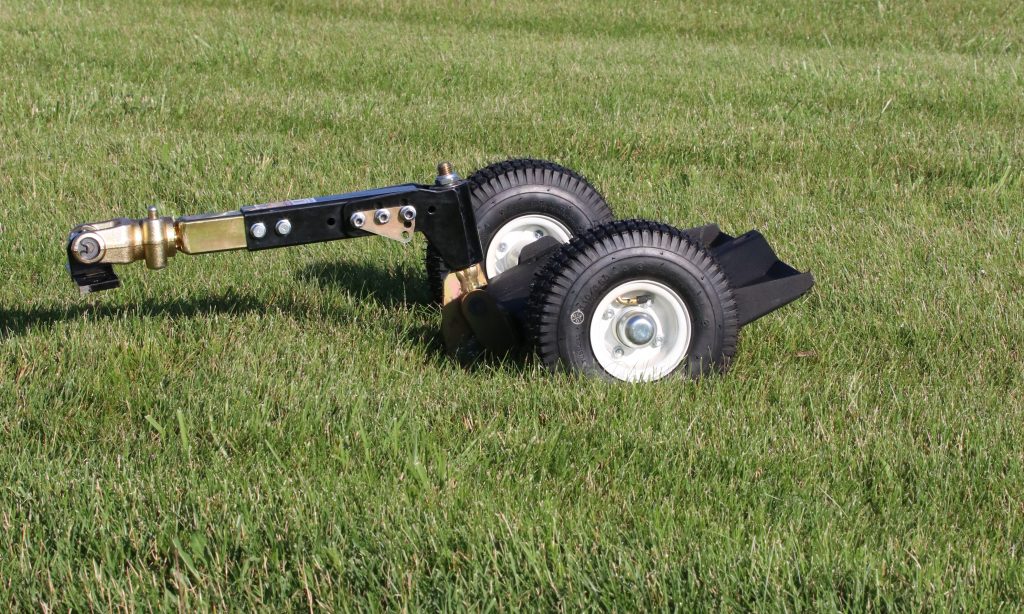
The Advantages of the Wheel Kaddy 360 Walk Behind Sulky
The Wheel Kaddy 360 approaches maneuverability differently.
Its standout feature is the 360-degree swivel capability, which dramatically changes how operators back and maneuver around obstacles.
In tight areas around spruce trees, landscaping islands, or ornamental plantings, the ability to quickly step off the sulky and reverse without fighting the trailer geometry becomes a major benefit.
Advantages of the Wheel Kaddy 360 include:
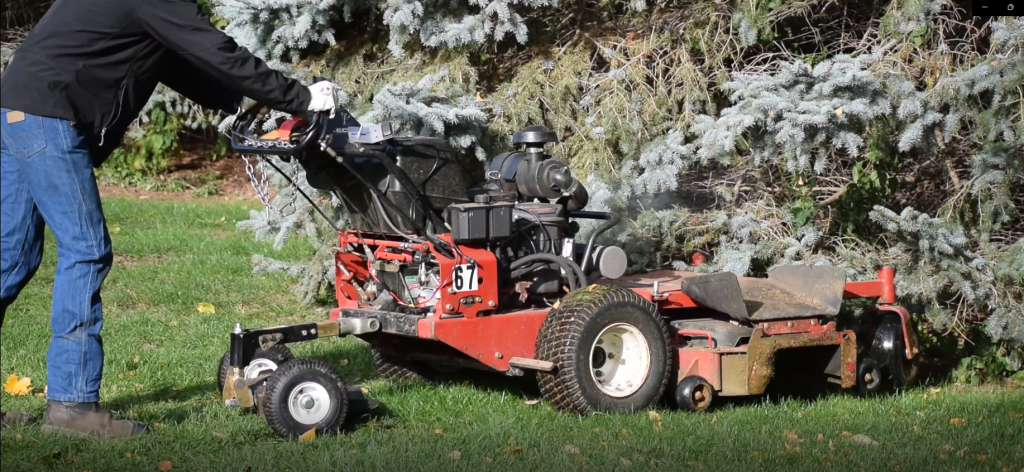
Easier Backing Maneuvers
The swivel design allows the sulky to move naturally with the mower during reverse operation, greatly reducing the chance of jackknifing.
Superior Maneuverability in Tight Areas
For crews frequently navigating dense tree lines, narrow access points, or complicated landscaping layouts, the 360 offers a more forgiving and agile experience.
Faster Transitioning
Operators can quickly step on and off the platform while trimming around obstacles or maneuvering beneath low branches.
Reduced Learning Curve
New operators often find the 360 easier to handle because backing behavior feels more intuitive.
Suspension for Improved Comfort
Like the Wheel Kaddy 500, the Wheel Kaddy 360 also includes suspension to help absorb bumps and reduce operator fatigue.
The tradeoff comes in the tire size.
Compared to the Wheel Kaddy 500, the Wheel Kaddy 360 uses smaller tires, which can transmit more bumps and impacts when traveling over rough terrain or exposed roots. On properties with heavily uneven ground, operators may notice a firmer ride despite the suspension system.
There is also an important safety consideration with the Wheel Kaddy 360. Operators should step off the sulky before backing up. Because of the 360-degree swivel motion, attempting to remain on the platform while reversing can create a pinch hazard between the platform and the sulky arm. Proper operation involves stepping off before backing to maintain safe foot placement and avoid injury.
Still, for crews prioritizing maneuverability over ride softness, the Wheel Kaddy 360 can be an ideal solution.
Choosing the Right Setup for Tree-Heavy Properties
When deciding between the Wheel Kaddy 500 and Wheel Kaddy 360, property type and mowing conditions matter significantly.
For large commercial properties with rough terrain, root-heavy lawns, and long mowing passes, the Wheel Kaddy 500’s larger tires may offer the best overall comfort and productivity.
For properties with dense landscaping, frequent backing maneuvers, narrow tree spacing, and highly technical mowing areas, the Wheel Kaddy 360’s swivel capability may provide a substantial efficiency advantage.
Many contractors ultimately choose based on operator preference and the specific demands of the properties they maintain most often.
The Bottom Line
Commercial walk-behind mowers remain one of the best tools for mowing around low-branching trees like spruce trees. Their compact size, maneuverability, and precise control allow operators to navigate difficult areas that larger riding equipment simply cannot handle efficiently.
Their operator-behind design also allows the mower deck to reach farther underneath low branches than a traditional zero-turn mower, helping crews reduce trimming time and produce a cleaner finished appearance around trees.
Adding a sulky like the KAGE Wheel Kaddy further enhances productivity by reducing fatigue and improving operator comfort throughout the workday.
Both the Wheel Kaddy 500 and Wheel Kaddy 360 include suspension systems that help soften rough terrain and improve ride quality. The Wheel Kaddy 500 delivers smoother travel over roots and uneven ground thanks to its larger tires, making it ideal for expansive or rough commercial properties—though it requires more skill when backing to avoid jackknifing.
Meanwhile, the Wheel Kaddy 360 prioritizes maneuverability and ease of backing with its swivel design, making it exceptionally useful in tight landscaping conditions. Operators should step off the platform before reversing to avoid potential foot pinch points created by the swivel motion.
For professional landscapers working around spruce trees and other obstacle-heavy environments, pairing a commercial walk-behind mower with the right sulky setup can create a faster, more comfortable, and more efficient mowing operation.
Recent Comments