
Adding hydraulic wings to a snow plow can dramatically increase what an operator can accomplish. Wings can expand clearing width, improve snow containment and give operators more control over where snow goes. But that additional capability comes with an unavoidable requirement: more hydraulic functions to control from the cab.
That can create a surprisingly frustrating problem.
Modern wheel loaders and tractors already have carefully designed joysticks that put the machine’s primary functions within easy reach. When an aftermarket wing plow is added, however, the operator suddenly needs additional controls for the attachment. Finding a convenient place for those buttons isn’t always easy.
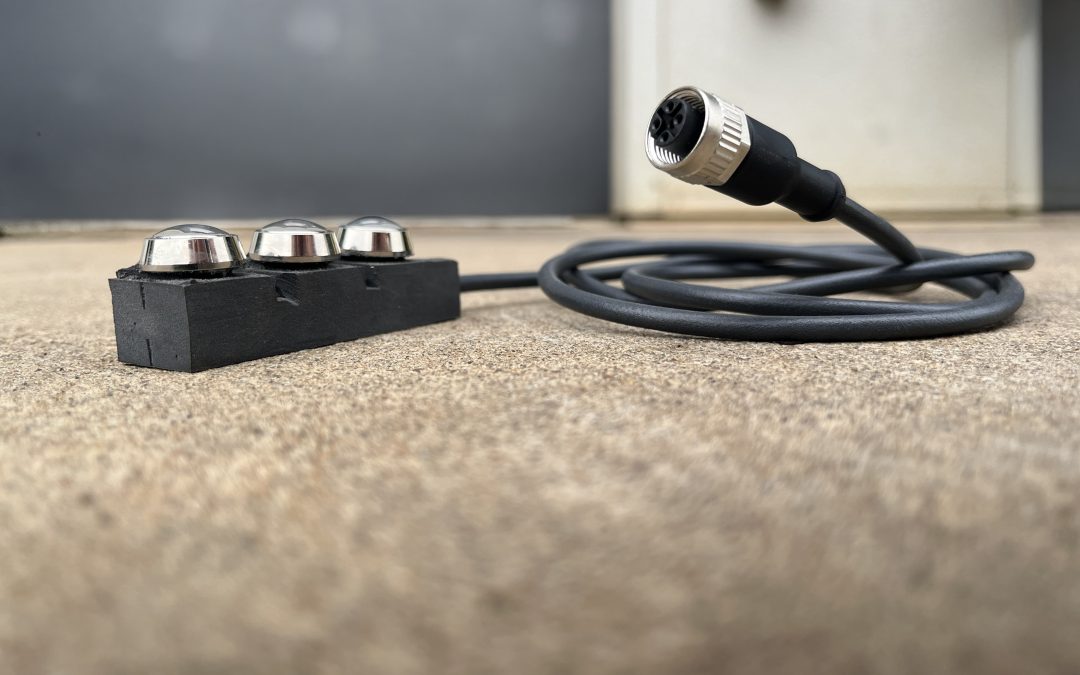
KAGE Innovation is addressing that problem with a new inline 3-button wing plow control designed to replace the previous disc-style 3-button controller used with KAGE wing plows.
The new controller may be small, but that is exactly the point. Its compact, flexible construction is designed to make adding wing controls to an existing loader or tractor joystick simpler, cleaner and more comfortable for the operator.
The Control Problem With Aftermarket Hydraulic Attachments
Equipment manufacturers spend a lot of time designing their factory controls. Buttons, switches and joystick functions are positioned so operators can access frequently used functions without unnecessarily moving their hands.
An aftermarket hydraulic attachment changes the equation.
A hydraulic wing snow plow requires functions that the original machine manufacturer may never have anticipated. The operator needs to control the plow itself while also independently changing the positions of the hydraulic wings.
Unless those functions can be integrated directly into the machine’s existing controls, another controller needs to be installed somewhere in the cab.
That’s where the challenges begin.
Traditional aftermarket controls can be relatively bulky, rigid or difficult to position exactly where an operator wants them. A control box mounted elsewhere in the cab may require the operator to remove a hand from the primary joystick. A larger joystick-mounted control can interfere with the operator’s grip or existing factory buttons.
There is also no single joystick design shared by every wheel loader and tractor.
Some are thick. Some are narrow. Some are highly contoured. Others incorporate multiple switches, triggers and proportional controls directly into the handle.
Designing one aftermarket control that works comfortably with all of them is difficult.
Wing Plows Make Convenient Controls Especially Important
Control placement becomes even more important with a hydraulic wing plow because operators may reposition the wings frequently throughout a storm.
An operator might widen the plow for an open pass, pull the wings forward to increase containment, reposition one side while working along an obstacle and then change the configuration again before entering another section of the property.
These aren’t necessarily functions an operator wants located on a separate control panel several inches—or several feet—away.
The easier the controls are to reach, the easier it becomes for the operator to take advantage of the versatility built into the wing plow.
Ideally, additional attachment controls should feel like an extension of the machine’s existing joystick rather than a completely separate system.
That goal was at the heart of KAGE’s new controller design.
Replacing the Disc-Style KAGE Controller
KAGE’s previous solution used a disc-style 3-button control. While it provided the necessary functions (independent and simultaneous wing control), KAGE saw an opportunity to create a controller that could adapt more naturally to the wide variety of joystick shapes found in tractors and wheel loaders.
The result is a new inline 3-button design.
Instead of placing the buttons on a larger disc-shaped surface, the new controller arranges the three controls in a narrow line. That significantly reduces the amount of space required on the joystick.
More importantly, the controller itself is flexible.
Rather than forcing a rigid controller onto a curved joystick, the new design can follow the shape and contour of the existing handle.
That seemingly simple change opens up considerably more mounting possibilities.
A Controller Designed to Follow the Joystick
Every machine cab is different, and even two loaders in the same general size class can have dramatically different joystick designs.
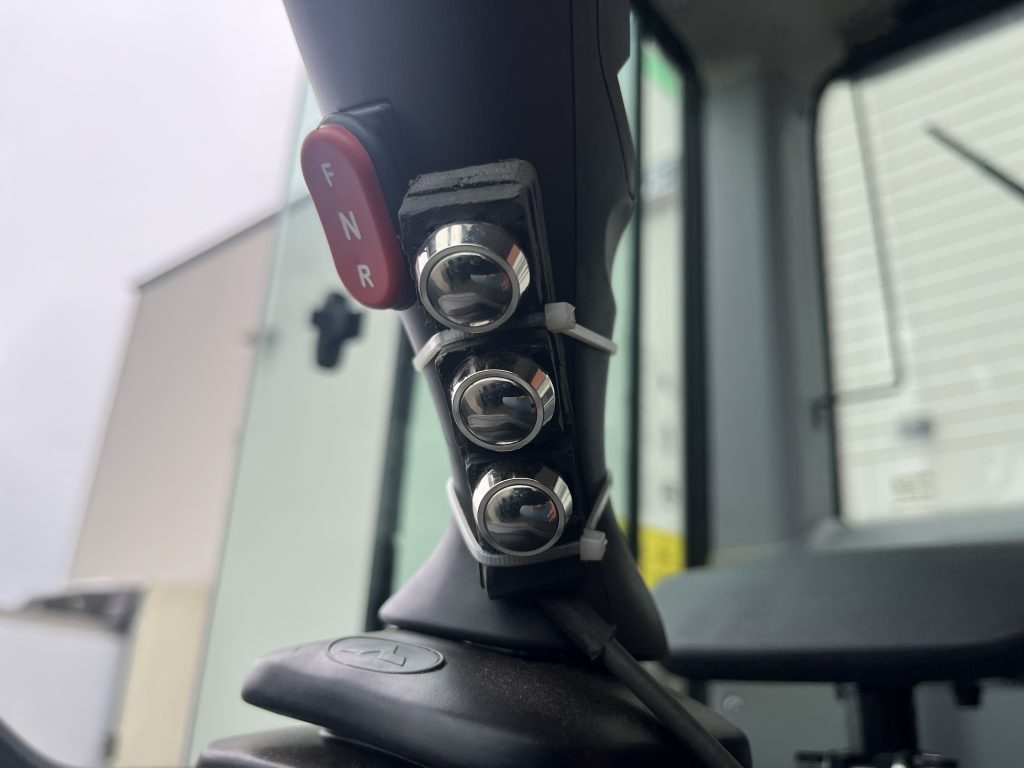
The flexible construction of the new KAGE controller allows it to conform to the surface on which it is mounted. Instead of searching for a perfectly flat section of the joystick, installers have more freedom to position the buttons where they make sense for that particular machine and operator.
The goal is simple: put wing functions where the operator can comfortably reach them.
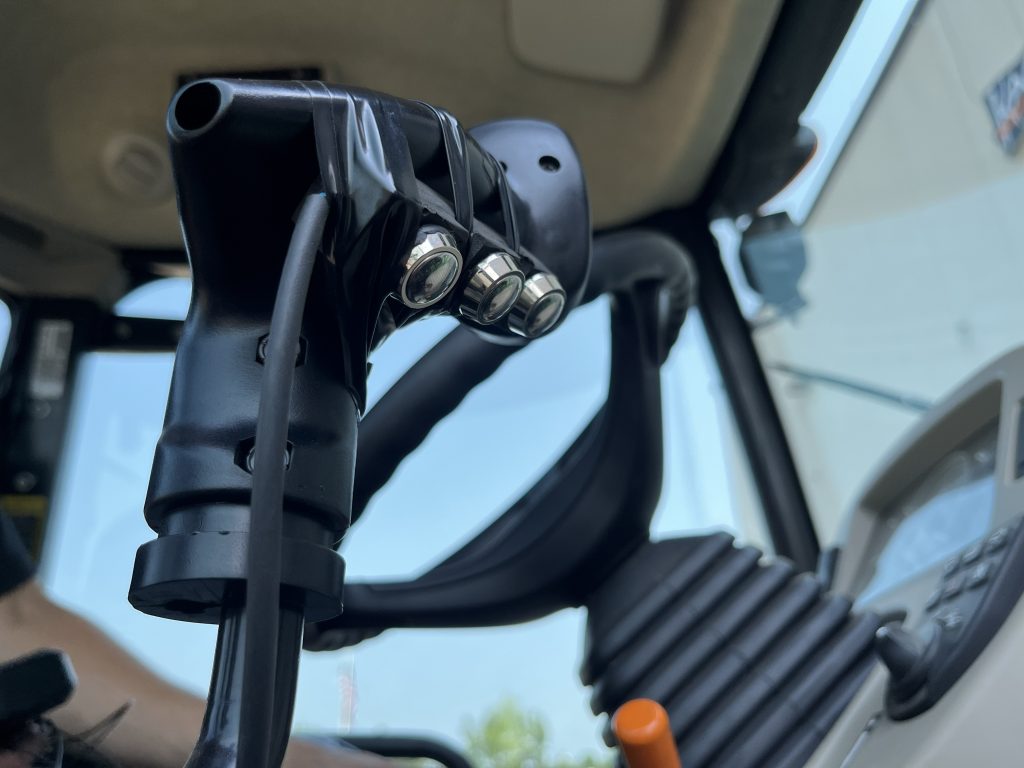
The controller can potentially be positioned along a curved portion of the joystick and secured using something as simple as a zip tie or electrical tape.
KAGE even incorporated grooves into the controller to help hold zip ties in position.
Those grooves provide a natural location for the ties so they are less likely to slide along the controller after installation.
There is no complicated mounting bracket required simply to secure three buttons to the joystick.
Simple Mounting Has Another Advantage
A universal aftermarket attachment needs to work on more than one brand or model of machine.
Creating a rigid mounting bracket for every possible joystick would quickly become impractical. Even within a single equipment manufacturer’s lineup, joystick configurations can vary between machine models, years and option packages.
A flexible control reduces the need to design around one specific handle.
If a joystick is wider, the controller can follow it.
If the surface is curved, the controller can bend with the contour.
If one side of the joystick contains factory switches, the installer has greater flexibility to locate the KAGE buttons somewhere else.
That adaptability is particularly valuable for KAGE because its wing plows can be used across different classes and brands of equipment.
Keeping the Operator’s Hand Where It Belongs
One of the biggest benefits of joystick-mounted attachment controls is reducing unnecessary hand movement.
Imagine an operator approaching the end of a snow-clearing pass. The machine needs to slow down, change direction and reposition the plow wings for the next pass.
If the wing controller is mounted elsewhere in the cab, the operator may have to reach away from the primary machine controls to make those adjustments.
Put those buttons directly under the operator’s fingers or thumb, and wing adjustments can become much more intuitive.
That’s particularly valuable during long snow events where an operator may make hundreds or even thousands of control inputs throughout a shift.
A small improvement in ergonomics repeated over an entire storm can make a meaningful difference.
Small Controls for Increasingly Sophisticated Machines
There’s another challenge facing aftermarket attachment manufacturers: modern equipment joysticks are already crowded.
Today’s loaders and tractors may incorporate transmission controls, auxiliary hydraulic functions, directional controls, boom functions and other machine features directly into a single joystick.
There simply isn’t much unused real estate.
That makes compactness increasingly important.
The new KAGE inline controller takes a different approach than trying to add another large control surface to an already busy joystick. Its narrow footprint allows it to fit into spaces where a larger controller may be awkward.
Instead of competing with the existing joystick, the controller is designed to work around it.
Designed Around Real-World Wing Plow Operation
KAGE Innovation builds snow removal equipment around the way operators actually use their machines in the field. The new inline 3-button control follows the same philosophy.
It isn’t about adding more technology simply for the sake of technology.
It’s about solving a practical problem.
Wing plows need additional controls. Those controls need to be easy to reach. Wheel loaders and tractors have many different joystick shapes. And operators shouldn’t need an oversized control box or complicated mounting arrangement just to conveniently operate their plow wings.
The new controller addresses those challenges with a straightforward combination of features:
- Compact inline 3-button configuration
- Flexible construction that follows joystick contours
- Small footprint for crowded modern equipment controls
- Simple mounting using zip ties or tape
- Integrated grooves that help keep zip ties positioned
- Greater freedom to locate buttons where they’re comfortable for the operator
- Compatibility with a wider variety of wheel loader and tractor joystick shapes
A Small Change That Can Make a Big Difference
Snow plow innovation isn’t always about making the plow bigger or adding another hydraulic function.
Sometimes the best improvements happen inside the cab.
KAGE’s new inline 3-button controller takes the functionality of its previous disc-style wing control and packages it in a design better suited to the diverse equipment operating today’s hydraulic wing plows.
Its flexible construction helps the controller conform to existing joysticks. Its narrow shape takes up less space. Built-in grooves simplify zip-tie mounting. And its simple installation gives operators more freedom to determine exactly where the controls should sit.
The result is a small component designed to solve one of the persistent headaches associated with aftermarket hydraulic attachments: where do you put the extra controls?
With the new KAGE inline 3-button wing plow controller, the answer can be as simple as finding the most comfortable spot on the joystick, flexing the controller to fit and securing it in place.
Because when you’re operating a hydraulic wing plow through a long winter storm, the best control isn’t just one that works.
It’s one that’s right where you want it.
Recent Comments