
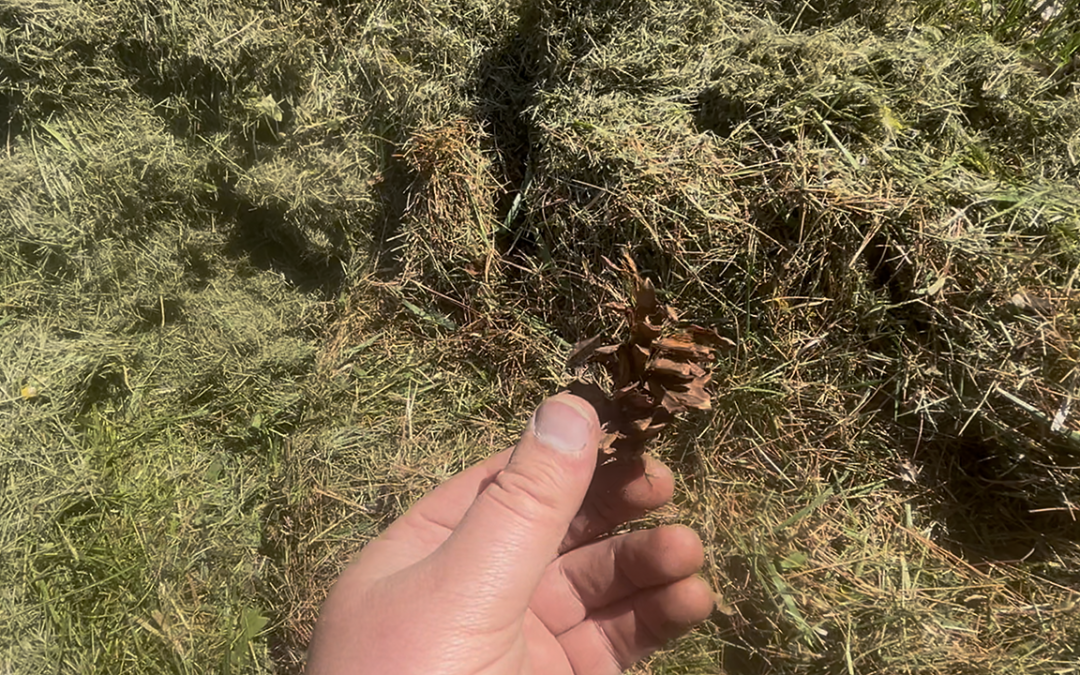
Trees add shade, character, and value to residential and commercial landscapes, but they can also create challenges for mowing crews.
Oak trees can cover turf with acorns. Black walnut trees drop large nuts and husks. Pine trees scatter cones beneath their canopies. Sweetgum trees leave behind hard, spiky seed balls.
For a commercial mowing contractor, these materials aren’t just a seasonal cleanup problem. They can affect how efficiently an operator mows and where material leaving the mower deck ends up.
Two tools can give operators more control in these conditions: the KAGE Grass Deflector, which allows the operator to control the mower’s discharge, and the KAGE Katcher, which provides the ability to collect material rather than simply disperse it.
Why Tree Debris Changes the Mowing Job
A side-discharge mower is designed to move material out of the deck efficiently. On open turf, that’s exactly what an operator wants.
The situation changes underneath mature trees.
Along with grass, the mower may encounter nuts, cones, seed pods, sticks, leaves, and other debris. Instead of thinking only about getting the grass cut, the operator also has to consider where that material is going.
That’s particularly important when trees are located next to:
- Roads and parking lots
- Sidewalks and walking paths
- Buildings and windows
- Vehicles
- Mulch and landscape beds
- Patios and outdoor gathering areas
- Other maintained turf
Those mowing should value controlling discharge around these types of boundaries. An operator-controlled deflector allows the discharge position to be changed as conditions change rather than forcing the operator to continually alter the mowing pattern.
That capability can become particularly useful during periods when trees are dropping large amounts of material.
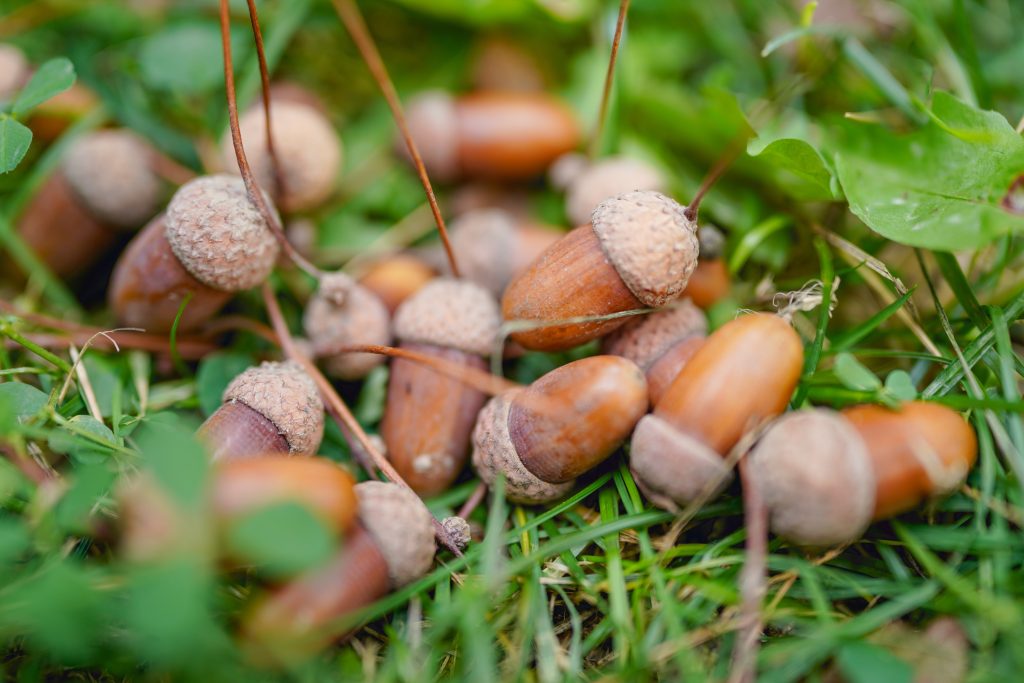
Oak Trees: Managing Turf Covered in Acorns
Oak trees are a familiar sight on residential lawns, parks, campuses, commercial properties, and other maintained landscapes.
When acorns begin dropping, however, the turf underneath a mature oak can quickly become covered.
Running a mower through that area introduces a material that is very different from ordinary grass clippings. Acorns are relatively small, hard objects that can be encountered throughout the entire mowing pass.
The KAGE Grass Deflector gives the operator control over the mower’s discharge opening. When mowing underneath an oak near a sidewalk, driveway, parking lot, landscape bed, or other sensitive area, the operator can close or reposition the deflector to better control where discharged material goes.
Once the mower returns to open turf, the operator can adjust the deflector again and resume normal discharge.
For properties where removing the material is preferable to redistributing it, the KAGE Katcher provides another approach. Its 5.8-cubic-foot basket collects material from the mower’s side discharge, allowing the operator to contain material rather than continually disperse it across the property.
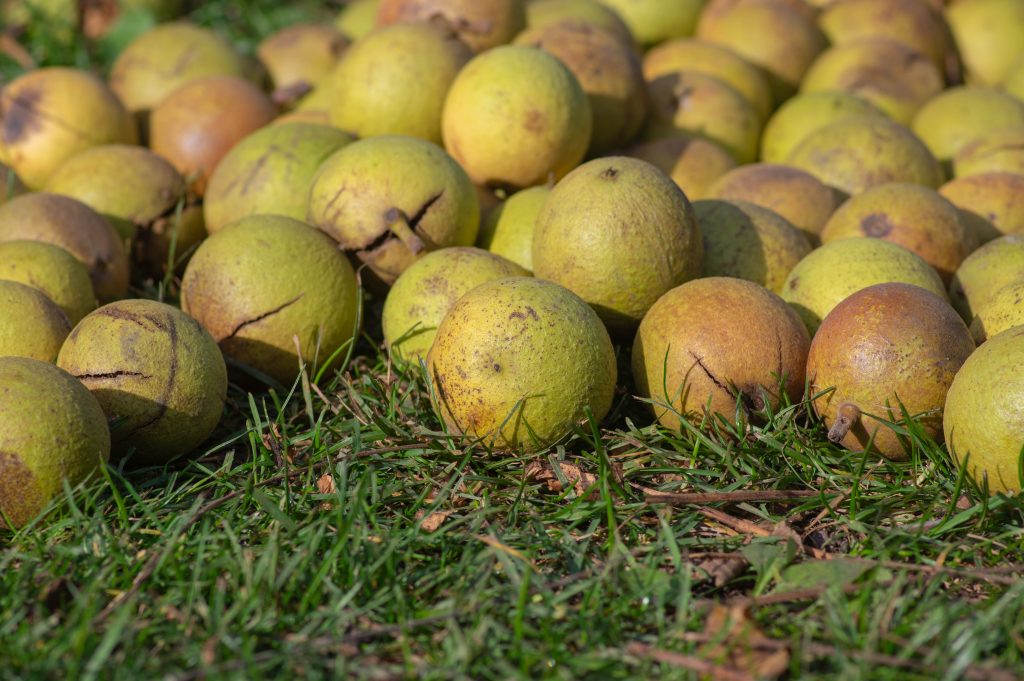
Black Walnut Trees: When the Debris Gets Bigger
Black walnut trees present an even more obvious mowing challenge.
A walnut surrounded by its husk is substantially larger than an acorn. When numerous walnuts accumulate underneath a mature tree, operators may need to pay additional attention to how they approach that portion of the property.
This becomes especially relevant when the tree stands near a property boundary.
Imagine mowing underneath a walnut tree with a parking lot on one side and a building on the other. Simply choosing a different mowing direction may not solve the problem throughout every pass.
An adjustable chute blocker gives the operator another option.
The KAGE Grass Deflector can be controlled from the operating position using its magnetic toggle switch. Its flap provides up to 260 degrees of pivot, allowing the operator to change the discharge angle or block the chute as conditions require.
Instead of accepting the same discharge configuration everywhere on the property, the operator can adapt the mower to the surroundings. Black Walnuts are large and hard and can product significant projectile risk. With the KAGE Grass Deflector’s torsion spring, you can easily put enough pressure on the flap to keep it closed tightly enough to prevent those projectiles for exiting through the chute.
Where collection makes more sense, the KAGE Katcher can help remove loose material from the mowing area while the turf is being serviced, reducing the amount that is simply redistributed across the property. This is the best option when mower width allows as it cleans up the debris and reduces the abuse your mower blades will need to endure.
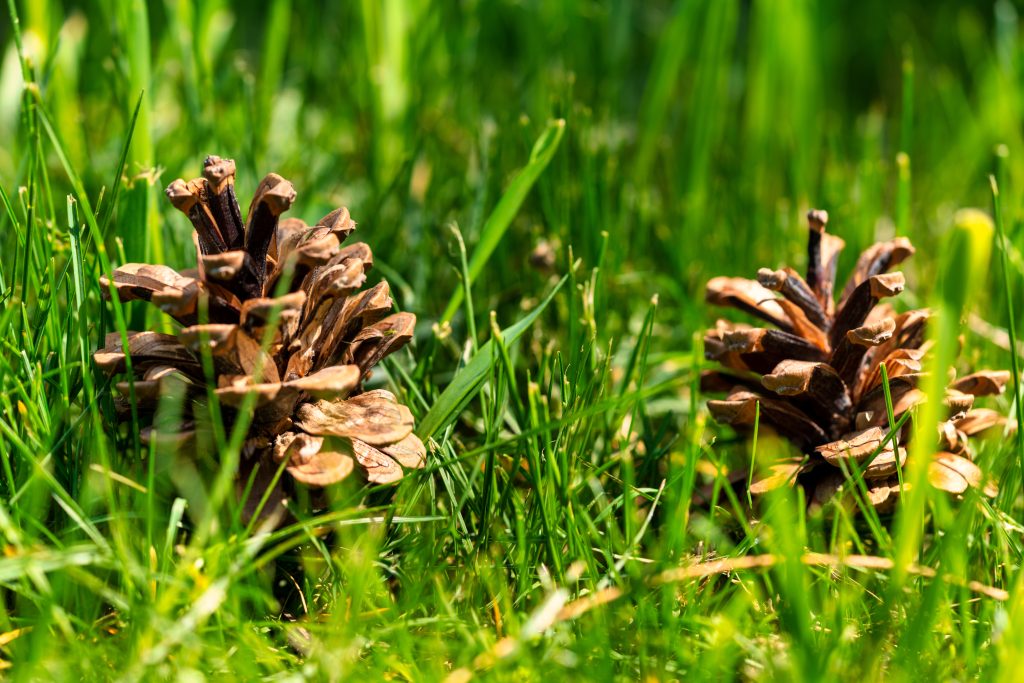
Pine Trees: Controlling Cones and Seasonal Debris
Pine trees create a somewhat different challenge.
Pine cones are larger and more irregular than most nuts. Areas underneath mature pines can also contain a mixture of cones, needles, small branches, and other organic material.
For a mowing crew, that can create both a discharge-control issue and a cleanup issue.
A fixed side-discharge opening gives the operator limited options. The crew may have to change its mowing direction, avoid certain passes, or perform additional cleanup afterward when material ends up somewhere it isn’t wanted.
The KAGE Grass Deflector allows the operator to change the discharge configuration while mowing.
Approaching a sidewalk? Adjust the deflector.
Passing a landscape bed? Control the discharge.
Returning to open turf? Open it back up.
That flexibility can be especially valuable on properties with multiple pine trees where conditions change repeatedly throughout the mowing route.
The KAGE Katcher can offer another advantage when the objective is cleanup. Rather than repeatedly dispersing loose organic material, the catcher provides the ability to collect it as the mower travels across the property.
Sweetgum Trees: Small Debris, Big Nuisance
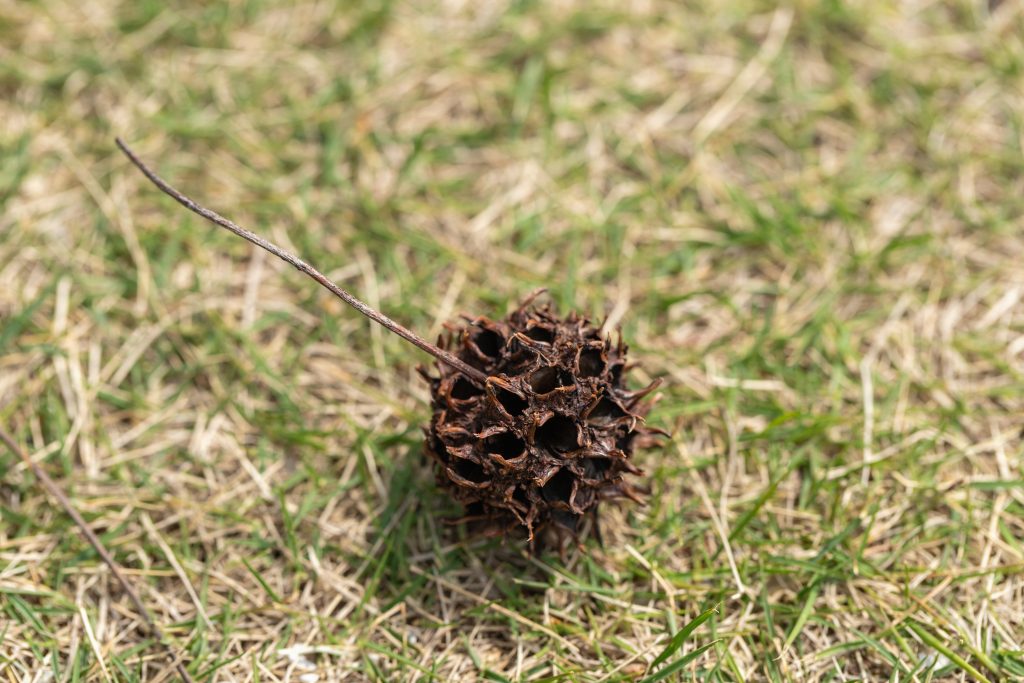
Sweetgum trees produce distinctive hard, spiky seed balls that can accumulate heavily underneath the canopy.
For anyone maintaining a property with mature sweetgum trees, they’re difficult to overlook.
The seed balls can remain scattered throughout the turf, creating another type of material for the mower to encounter. And because large numbers can accumulate in relatively concentrated areas, simply mowing through them may move the problem from one part of the property to another.
This is where the distinction between deflecting and collecting becomes important.
If the goal is to keep material away from a sidewalk, parking area, landscape bed, or other boundary, the KAGE Grass Deflector gives the operator greater control over discharge.
If the objective is to actually remove loose material from the turf, the KAGE Katcher is the better choice.
Deflect or Collect?
The right solution depends on what the operator is trying to accomplish.
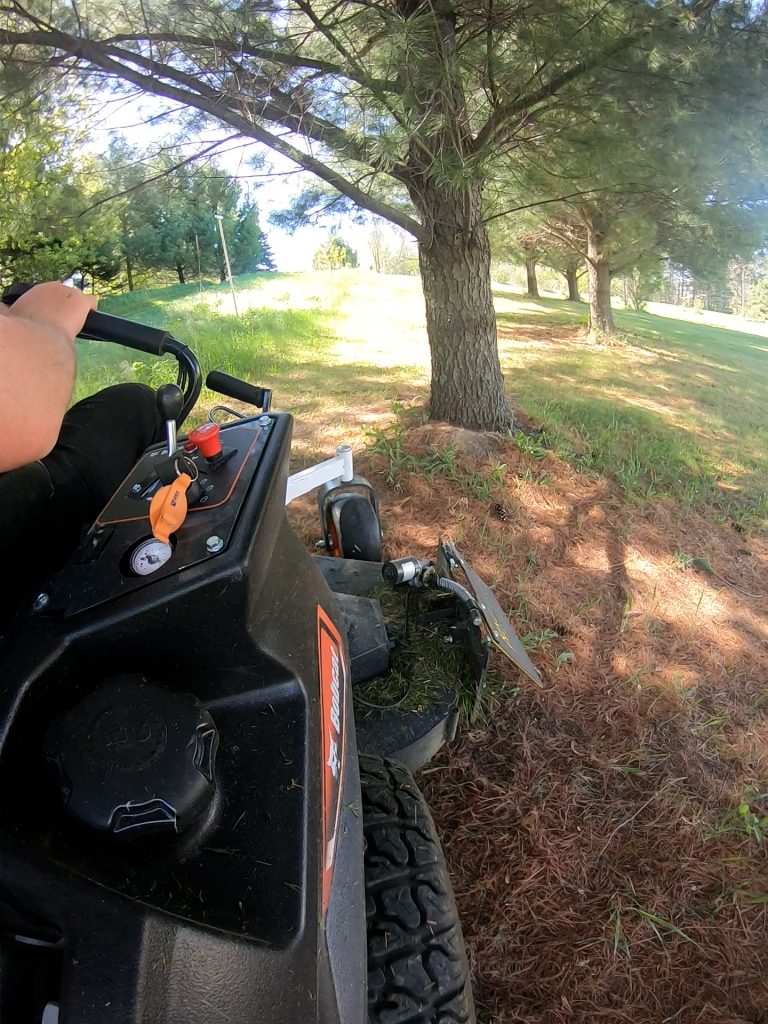
The KAGE Grass Deflector is useful when material can remain on the turf but the operator needs greater control over where it is discharged. Instead of stopping to manually reposition a chute or planning every pass around the discharge side of the deck, the operator can adjust the flap from the operating position.
The KAGE Katcher makes more sense when simply redirecting material isn’t enough. It mounts to the mower’s side discharge and uses a 5.8-cubic-foot basket to collect material. An electric actuator allows the operator to dump the basket without leaving the operating position, and the unit can transition between collection and dispersion without being removed from the mower.
That gives contractors two different approaches to tree-covered properties:
Control where material goes with the KAGE Grass Deflector, or collect material with the KAGE Katcher.

More Control Can Mean Less Cleanup
Commercial mowing productivity isn’t only about acres per hour.
The job isn’t finished until the property looks finished.
If mowing underneath trees leaves nuts, cones, seed pods, grass, and other organic material scattered across sidewalks, parking areas, landscape beds, or other maintained surfaces, someone may have to come back and clean those areas.
Those additional minutes become part of the cost of servicing the property.
Preventing unwanted discharge—or collecting material during the mowing process—can reduce the amount of corrective cleanup required afterward.
Across one property, the difference may be relatively small. Across a commercial mowing route containing dozens of properties, small improvements in each stop can add up.
Take Control Under the Trees
Oak trees, black walnuts, pines, and sweetgums aren’t unusual obstacles. They’re part of the everyday landscape that professional mowing crews have to work around.
What changes throughout the season is what’s underneath them.
When nuts, cones, seed pods, leaves, and other debris begin accumulating, operators don’t necessarily have to accept an uncontrolled side discharge or continually redesign their mowing pattern around it.
The KAGE Grass Deflector provides on-the-go control over where material is discharged.
The KAGE Katcher provides the option to collect material when keeping it contained is the better approach.
Whether you’re mowing underneath an oak dropping acorns, a black walnut covering the lawn with husks, a pine scattering cones, or a sweetgum leaving seed balls throughout the turf, greater control at the mower can help make difficult properties easier to manage.
Deflect it when you need to control it. Collect it when you need it gone.
Recent Comments