
A successful lawn renovation begins long before the first grass seed is spread or the first roll of sod is installed. The quality of the finished lawn depends heavily on what happens below the surface: correcting drainage problems, relieving compaction, establishing a consistent grade, removing unwanted vegetation, and creating a seedbed that supports rapid, even rooting.
Skipping these steps can produce thin growth, standing water, exposed high spots, recurring weeds, and turf that struggles during heat or drought. Whether you are restoring a worn residential lawn, rebuilding turf after construction, or preparing a larger commercial property, the following site preparation methods will give the new lawn a stronger foundation.
1. Evaluate the Existing Site
Begin with a thorough inspection. Walk the entire area and identify bare patches, ruts, compacted traffic lanes, low spots, steep transitions, erosion, buried debris, and areas where water collects after rain. Also note existing turf, weeds, rocks, tree roots, irrigation components, utility covers, and any structures that affect runoff.
Drainage deserves special attention. A lawn should direct water away from buildings and toward an appropriate outlet without creating erosion or sending runoff onto neighboring property. If the site has chronic standing water, simply adding seed or sod will not solve the underlying problem. The grade may need to be corrected, a swale may need to be formed, or subsurface drainage may be required.
Before digging or grading, have underground utilities located. Mark sprinkler heads, shallow irrigation lines, invisible fencing, lighting cables, and septic components that may not be included in a standard utility locate.
2. Test the Soil Before Adding Amendments
A soil test removes the guesswork from fertilization and pH correction. Collect representative samples from several locations across the renovation area and submit them to a reputable laboratory or local extension service. The results can reveal soil pH, nutrient levels, organic matter, and other conditions that influence turf establishment.
Apply lime, sulfur, fertilizer, or other amendments according to the test recommendations and the needs of the grass species being planted. More is not better. Excess fertilizer can damage seedlings, waste money, and increase the risk of nutrient runoff. When organic matter is needed, use a consistent, well-finished compost or suitable topsoil and incorporate it evenly into the prepared layer rather than leaving isolated pockets.
3. Remove Existing Vegetation and Debris
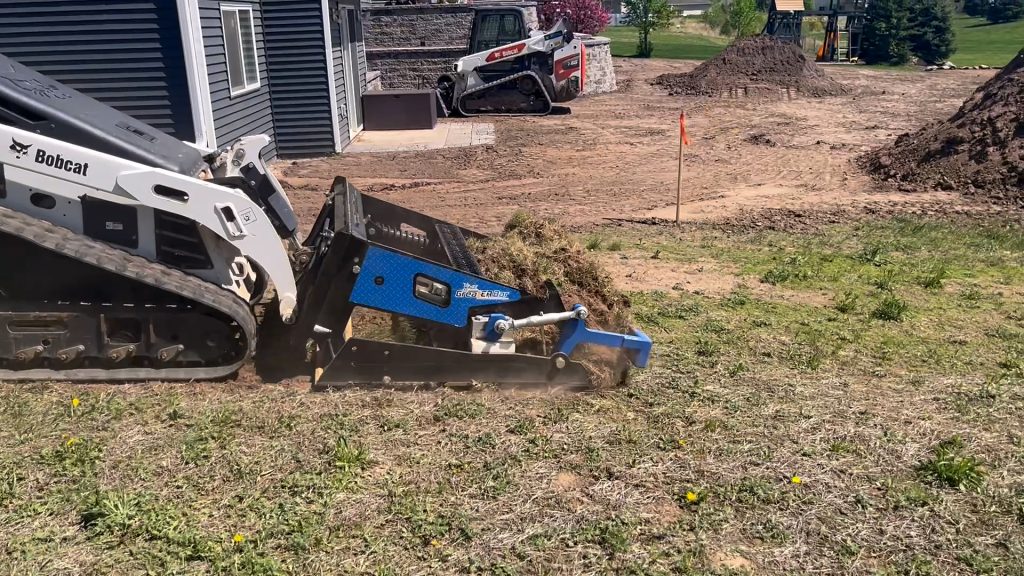
For a complete renovation, unwanted turf and weeds must be removed or terminated so they do not compete with the new lawn. The right method depends on the site, schedule, and degree of infestation. Options may include stripping the old sod, repeated shallow cultivation, solarization on appropriate small sites, or the careful use of a labeled herbicide.
Always follow the product label, including the required interval between application and seeding. Persistent perennial weeds may need more than one treatment. If weed seed production is already underway, remove or contain the material so it is not redistributed throughout the site.
Clear rocks, roots, construction scraps, and other debris that could interfere with grading or future mowing. Large buried material can settle later and create depressions, so it is better to address it during preparation than after the new turf has been established.
4. Relieve Compaction and Break Up the Surface
Compaction is one of the most common obstacles to lawn establishment, particularly around new construction, drive lanes, event spaces, and areas traveled by heavy equipment. Dense soil limits air and water movement, restricts root growth, and increases runoff.
Lightly compacted existing turf may respond to core aeration. A full renovation, however, often benefits from deeper loosening or scarification. The objective is to break the compacted layer without pulverizing wet soil or destroying the site’s structure. Never work soil when it is saturated; equipment can smear clay, create hard layers, and leave deep ruts that require additional repair.
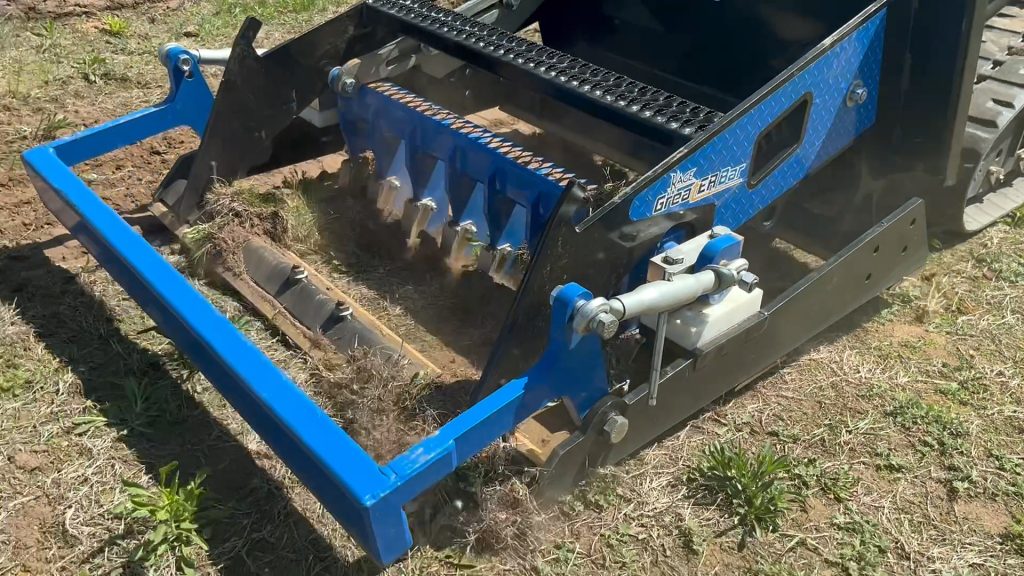
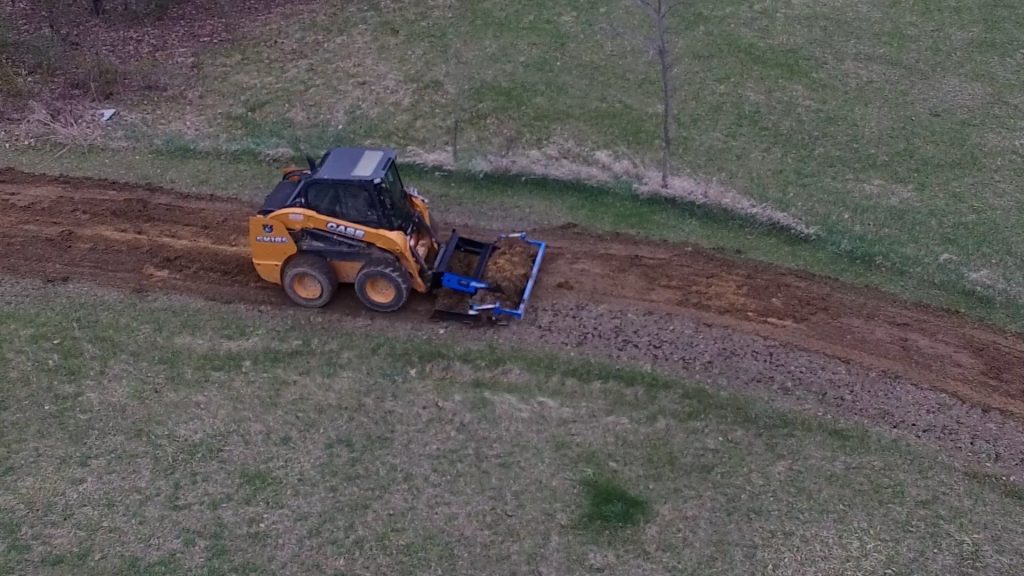
This is where the KAGE GreatER Bar can add substantial efficiency. The skid steer land plane is available with a Quick Rip Bar that uses scarifier teeth to loosen hard, compacted material. The ripper system can be deployed or stowed mechanically from the operator’s cab without hydraulic connections. That allows an operator to loosen difficult areas and then transition to grading without stopping to connect hoses or manually reposition individual teeth.
5. Establish the Rough Grade and Correct Drainage
Once the soil is workable, shape the site to eliminate abrupt humps, fill depressions, and create positive drainage. Rough grading establishes the overall contours; it is not yet the final seedbed. Whenever possible, preserve enough quality soil at the surface to support turf roots rather than exposing sterile subsoil.
Fill should be placed in manageable lifts and settled appropriately to reduce future sinking. Pay particular attention near foundations, sidewalks, patios, curbs, and catch basins. Account for the finished elevation of sod or the slight elevation change created by added topsoil so the completed lawn does not sit above pavement or block drainage paths.
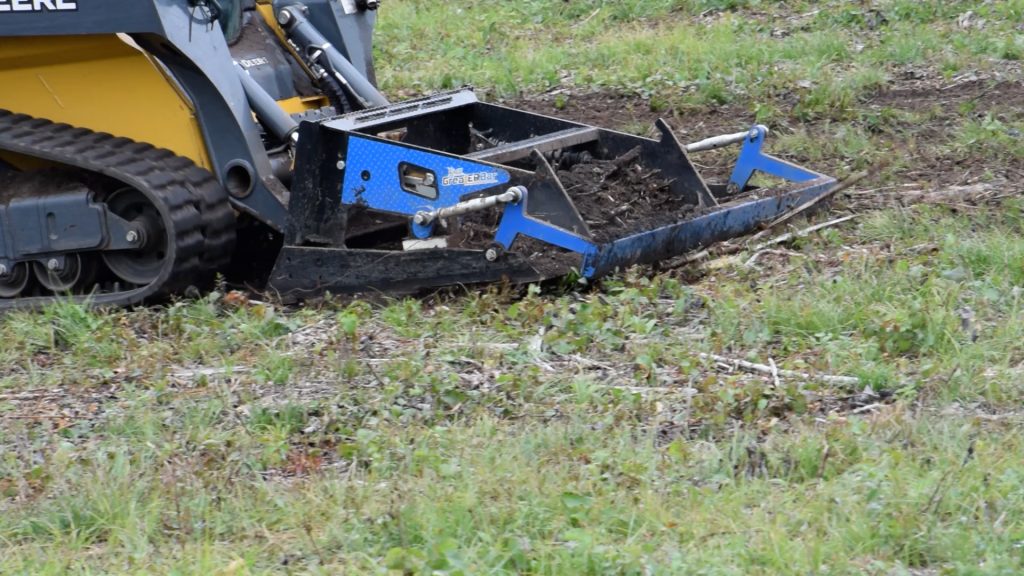
The GreatER Bar is designed to cut high areas, redistribute loose material, fill small depressions, and contour the ground without removing excess topsoil. Preparing soil for seed or sod is among the attachment’s intended applications. On larger renovation sites, this combination of scarifying and land-planing can reduce tool changes and help the operator move efficiently from rough correction toward a more uniform surface.
6. Add and Blend Topsoil or Compost Where Needed
Imported topsoil should solve a defined problem, not simply cover poor preparation. Verify the material’s texture, cleanliness, and consistency before spreading it across the site. Avoid soil contaminated with stones, construction debris, aggressive weeds, or excessive clay.
Spread the specified depth evenly, then blend the transition into the existing soil where practical. A sharp boundary between two very different soil layers can interfere with drainage and rooting. If compost is being used as an amendment, apply it at an appropriate rate and mix it through the upper root zone rather than leaving a thick, moisture-holding layer on the surface.
7. Complete the Finish Grade and Prepare the Seedbed
Finish grading creates the smooth, firm surface needed for consistent seed placement or sod contact. Make lighter passes as the grade improves. Remove remaining stones, clods, roots, and debris, then rake tight areas by hand. The surface should be smooth enough for mowing but should still retain a fine, slightly textured finish that resists crusting and helps hold seed in place.
Avoid leaving the soil excessively loose. A seedbed should be firm enough that a footprint sinks only slightly. If the soil is too fluffy, it may settle unevenly after irrigation or rain. A light roller can help firm the surface, but over-rolling can recreate the compaction you just worked to remove.
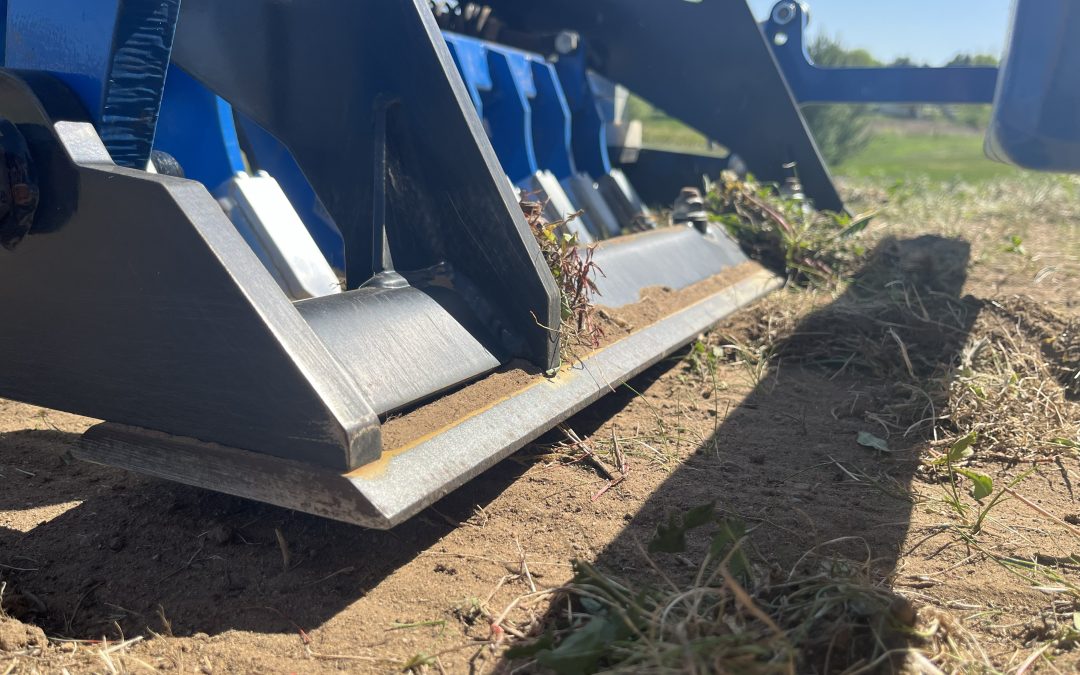
The GreatER Bar’s replaceable cutting edges can help form and smooth the grade before final hand raking or other fine-finishing work. Its spring-loaded ripper teeth retract when reversing and re-engage during forward travel, supporting a workflow that alternates between loosening and smoothing. The teeth also serve to unearth small to mid-size roots and rocks, and can push them into piles for easier collection. The attachment is offered in 48-, 72-, and 84-inch widths, allowing contractors to match the tool more closely to mini equipment or full-size skid steers and compact track loaders. The 48-inch size is designed for mini skid steers and track loaders (and keeps the ripper teeth closer together) while the 72- and 84-inches sizes are compatible with nearly any style of equipment using a full-sized universal skid steer attachment system.
8. Choose the Right Grass and Installation Window
Select grass species and cultivars for the region, sunlight, soil, expected traffic, and maintenance level. The best planting window varies by climate and turf type. Cool-season grasses generally establish best when soil is warm but air temperatures are moderating, while warm-season grasses are typically installed during their active growing period.
For seeding, calibrate the spreader and apply the recommended rate. Divide the seed into two portions and spread in crossing directions for more uniform coverage. Lightly rake or otherwise incorporate it only to the depth recommended for that species, then apply an appropriate mulch if needed for erosion and moisture control.
For sod, install promptly after delivery. Stagger joints, fit edges tightly, avoid stretching the rolls, and ensure full soil-to-sod contact. On slopes, orient and secure sod according to accepted local practices so irrigation cannot wash it out before rooting.
9. Irrigate for Establishment, Not Runoff
New seed and sod need consistent moisture, but overwatering can undo careful grading, move seed, create gullies, and encourage disease. Newly-seeded soil usually requires light, frequent irrigation at first to keep the surface moist. As seedlings develop, reduce frequency and increase depth to encourage deeper roots. New sod should be kept uniformly moist through the soil interface, then transitioned to deeper, less frequent watering as it roots.
Inspect the site during the first several irrigation cycles. Adjust sprinklers to prevent puddling and runoff, and repair minor washouts before they become larger grade problems. Limit traffic until the turf is established enough to resist displacement and compaction.
Better Preparation Produces Better Turf
Lawn renovation is not simply a planting project; it is a soil and grading project first. The strongest results come from diagnosing the site, correcting drainage, testing and amending the soil, eliminating competition, relieving compaction, and creating a smooth, firm planting surface.
For contractors and property managers working with skid steers or compact loaders, the KAGE GreatER Bar can streamline several of those critical steps. Its ability to scarify, redistribute material, level, contour, and prepare ground for seed or sod makes it especially useful on sites where compacted soil and uneven grades must be addressed together. The mechanical Quick Rip system further reduces interruptions by allowing the operator to switch between ripping and grading without hydraulics or leaving the cab.
No attachment replaces sound site evaluation, soil testing, or careful finish work. But paired with the right renovation plan, the GreatER Bar can help turn a rough, compacted surface into a well-shaped foundation ready for healthy, durable turf.
Recent Comments